
There’s something comforting about a classic peanut butter cookie—soft, chewy, a little nutty. But most traditional recipes are loaded with processed sugar, white flour, and butter. That’s why this version has become such a favorite. It keeps the nostalgic flavor while ditching the extras your body doesn’t need.
With just five pantry-friendly ingredients, these healthy peanut butter cookies come together in minutes. They’re naturally sweetened with maple syrup or honey, use almond flour instead of refined flour, and skip the butter altogether. Best of all, they don’t taste like a compromise. You get rich peanut flavor, a soft-baked texture, and just the right amount of sweetness in every bite.
If you’ve ever tried to make “healthy” cookies and ended up with something dry or bland, this recipe will change your mind. The natural fat in peanut butter gives these cookies their tender crumb, while almond flour adds nuttiness and a slightly chewy texture. A pinch of sea salt on top? That’s the perfect finish.
Whether you want a wholesome dessert, a lunchbox treat, or a midday snack with coffee, these cookies fit the bill. And because they’re naturally gluten-free and made without dairy or eggs, they’re easy to share with friends and family who have different dietary needs.
In the next section, we’ll break down the ingredients and go step-by-step through how to make these cookies at home. You don’t need any fancy tools or hard-to-find items—just a bowl, a spoon, and a few minutes in the oven.
Simple Ingredients and How to Make Healthy Peanut Butter Cookies
Pantry Staples with a Purpose
This recipe keeps things simple without cutting corners on flavor. Every ingredient serves a role in texture, sweetness, or structure—without relying on refined flour or processed sugar.
Ingredients:
- 1 cup creamy natural peanut butter: Look for peanut butter with just peanuts and salt. No added oils or sugar. It’s rich in healthy fats and gives the cookies their chewy, satisfying texture.
- ½ cup maple syrup or honey: Both options add natural sweetness. Maple syrup is vegan-friendly and adds a light, caramel-like flavor.
- 1 teaspoon vanilla extract: This deepens the flavor and brings out the natural nutty notes.
- 1 cup almond flour: A grain-free, gluten-free flour made from finely ground almonds. It gives a soft, dense texture that holds together well.
- Flaked sea salt (optional): Just a light sprinkle before baking adds contrast and enhances the overall flavor.
This recipe is naturally free from dairy, gluten, and refined sugars, making it an excellent choice for many dietary preferences.
Step-by-Step Baking Instructions
Step 1: Preheat your oven to 350°F and line a baking sheet with parchment paper. This keeps the cookies from sticking and makes cleanup easier.
Step 2: In a medium bowl, stir together the peanut butter, maple syrup or honey, and vanilla. Mix until smooth.
Step 3: Add the almond flour to the bowl and stir again until fully combined. The dough will be thick but easy to scoop.
Step 4: Use a medium cookie scoop or spoon to form dough balls and place them on the lined baking sheet. Leave some space between them.
Step 5: Flatten each dough ball gently using a fork. Press once vertically, then again horizontally to create the signature crisscross pattern.
Step 6: If using, sprinkle a small pinch of flaked sea salt on each cookie for a finishing touch.
Step 7: Bake in the preheated oven for about 12 minutes, or until the edges just start to brown. Don’t overbake—they firm up more as they cool.
Step 8: Let cookies rest on the baking sheet for a couple of minutes before transferring to a wire rack to cool completely.
These cookies come out soft and chewy, with a golden edge and rich peanut flavor. They’re ready to eat once cool, and even better the next day.
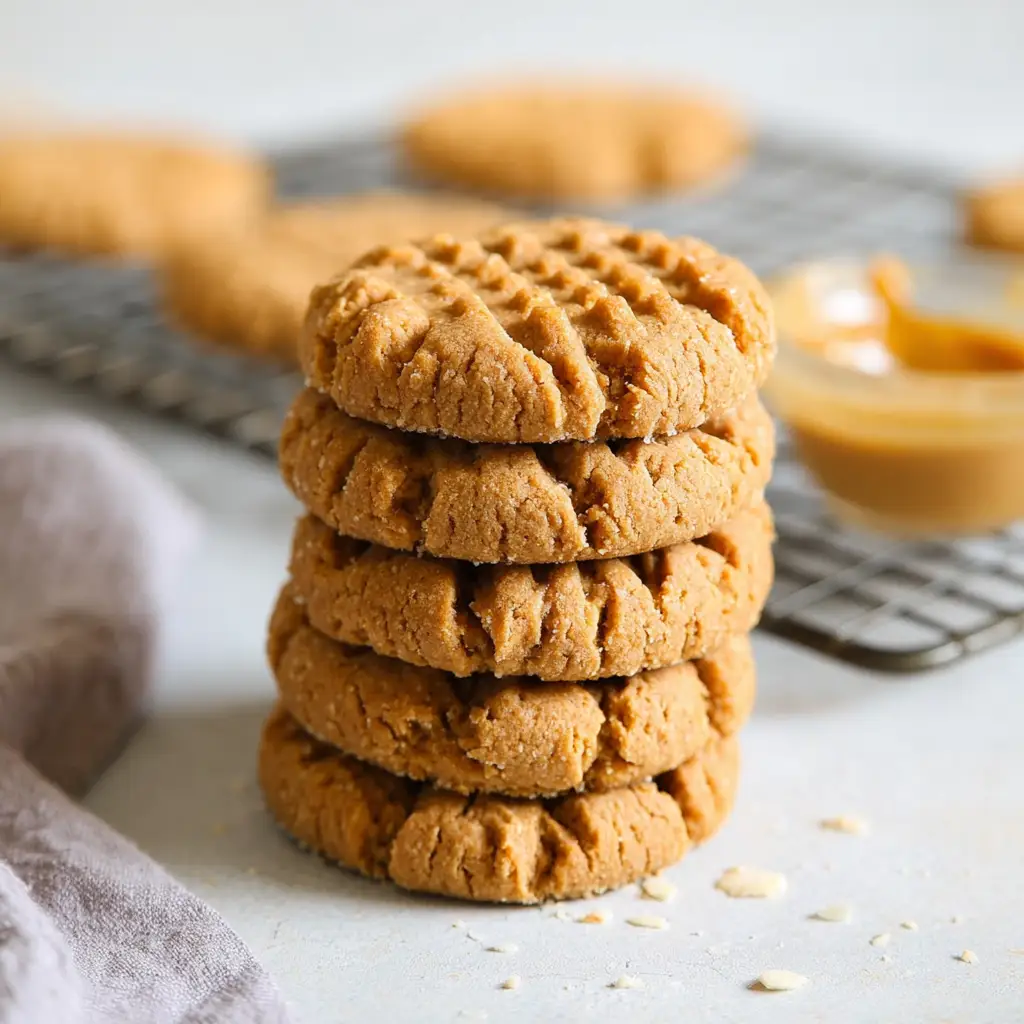

Peanut Butter Cookies
Ingredients
Method
- Preheat oven to 350 degrees F and line a baking sheet with parchment paper.
- Add peanut butter, maple syrup and vanilla into a mixing bowl. Once combined, add in almond flour and stir until incorporated.
- Use a medium cookie scoop to scoop dough onto prepared baking sheet. Alternatively, you can scoop dough with a spoon and roll it into a ball.
- Flatten each dough ball with a fork, making a crisscross pattern and sprinkle a little flaked sea salt on top of each cookie, if using.
- Bake in a preheated oven for about 12 minutes or until cookies begin to brown. Remove from oven, allow cookies to cool on a wire rack and enjoy.
Notes
Serving: 1cookie | Calories: 169kcal | Carbohydrates: 12g | Protein: 6g | Fat: 12g | Saturated Fat: 1g | Sodium: 41mg | Fiber: 2g | Sugar: 8g
Storing and Customizing Your Healthy Peanut Butter Cookies
Storage Tips to Keep Cookies Fresh
Once your cookies are cooled, store them in an airtight container to preserve their soft, chewy texture. Here’s how to keep them at their best:
- Room temperature: Keep cookies in a sealed container for up to 4 days. They’ll stay soft and flavorful without needing refrigeration.
- Refrigerator: Store for up to 7 days. The cookies firm up slightly in the fridge but remain chewy.
- Freezer: Freeze in a single layer, then transfer to a bag or container. They’ll last up to 2 months. Just thaw at room temperature before eating.
This flexibility makes them a great prep-ahead treat. Bake once, enjoy for days.
Customization Ideas and Substitutions
These cookies are easy to adapt based on what you have or what you’re avoiding. Here are a few common swaps:
No almond flour?
Try oat flour instead for a heartier texture. You can make it at home by blending rolled oats into a fine powder.
Vegan version?
Stick with maple syrup instead of honey to keep it fully plant-based. The flavor is equally rich.
Nut-free option?
Use sunflower seed butter in place of peanut butter and pumpkin seed flour or oat flour instead of almond. Just note that sunflower seed butter may turn the cookies green due to a reaction with baking soda, which doesn’t affect taste.
Add-ins:
For extra texture or flavor, stir in a handful of dark chocolate chips, chopped peanuts, or a dash of cinnamon to the dough before baking.
These tweaks make the recipe easy to tailor for your lifestyle, food sensitivities, or cravings. Whether you want something nut-free, vegan, or just more chocolatey, it adapts without losing what makes it great: easy prep and real ingredients.

Frequently Asked Questions
Are healthy peanut butter cookies gluten-free?
Yes, this recipe is naturally gluten-free. It uses almond flour instead of wheat flour, which makes the cookies safe for those avoiding gluten. Always check your peanut butter and vanilla extract labels to confirm there are no hidden gluten-containing additives.
What makes peanut butter cookies healthier?
These cookies are healthier because they skip the refined sugar, butter, and white flour found in traditional recipes. Instead, they rely on natural peanut butter, maple syrup or honey for sweetness, and almond flour for structure. The result is a more nutrient-dense cookie with fiber, protein, and healthy fats.
Can you make healthy peanut butter cookies without flour?
Yes. Some recipes use just peanut butter, egg, and sweetener, creating a flourless cookie that still holds together well. However, this version uses almond flour to create a soft texture and boost nutrition without using traditional flour. It offers more structure while staying grain-free.
How can I store healthy peanut butter cookies to keep them fresh?
Store cooled cookies in an airtight container at room temperature for up to 4 days, or in the refrigerator for a week. For longer storage, freeze the cookies and thaw when ready to eat. This keeps them soft, flavorful, and ready anytime you need a treat.
Conclusion: A Smart Way to Satisfy Your Sweet Tooth
These healthy peanut butter cookies prove that you can enjoy a classic dessert without added guilt or hard-to-find ingredients. With a short prep time, five simple components, and a chewy, satisfying texture, they check every box for a better-for-you treat.
Whether you’re baking for yourself, your kids, or just to have something on hand that feels indulgent but fuels you well, this recipe is worth repeating. It’s proof that healthy baking doesn’t mean giving up flavor or fun.