
A bowl of chicken pho has a way of slowing everything down. The steam rises from the broth, carrying the warm scent of ginger and spices, and suddenly the kitchen feels calm and inviting. It’s the kind of meal that feels comforting without requiring hours of work.
This easy chicken pho keeps the spirit of the traditional dish while fitting into a regular evening at home. The broth develops deep flavor in a short time, the chicken stays tender, and everyone at the table can add their favorite toppings. The result is a warm, fragrant bowl that feels satisfying without feeling complicated.
The Story & Emotional Connection
A Bowl That Brings Comfort
The first time I made chicken pho at home, I expected it to be complicated. I had always associated pho with long simmering pots and careful preparation. But one evening I wanted something warm and soothing, and I started experimenting with a simpler approach.
As the broth simmered, the kitchen filled with the scent of star anise and ginger. Even before the soup was finished, the smell alone felt comforting. By the time the bowls were ready, everyone gathered around the table quickly. There was something about the warmth and aroma that pulled people in.
That first bowl reminded me that comfort food doesn’t need to be complicated. Sometimes the simplest meals are the ones that stay with you.
Why This Dish Fits Everyday Life
This version of chicken pho works beautifully on busy evenings. The ingredients are easy to find, the cooking process is straightforward, and the flavors still feel rich and satisfying.
Because the broth cooks with whole spices, it develops depth quickly. The chicken cooks gently in the broth, which keeps it tender and flavorful. Once everything is ready, the toppings bring brightness and freshness to the bowl.
It’s the kind of dinner that feels nourishing without asking too much from the cook.
What Makes This Recipe Work
A Broth With Balanced Flavor
A good pho always begins with the broth. In this recipe, chicken broth forms the base and absorbs the flavor of ginger, scallions, cloves, and star anise as it simmers.
Ginger adds warmth and a subtle brightness. The cloves and star anise bring gentle spice and a hint of sweetness. Scallions round everything out with a mild onion flavor that blends smoothly into the broth.
Once the chicken cooks in the broth, it adds even more richness. A spoonful of hoisin sauce near the end brings a slight sweetness that ties all the flavors together.
A Dependable, Low-Stress Method
One of the reasons this recipe works so well is that it keeps things simple.
Instead of preparing the chicken separately, it cooks directly in the broth. This saves time and adds flavor at the same time. The spices remain whole, which means they are easy to remove once the broth has finished simmering.
The process feels calm and steady. You add the ingredients, allow the broth to simmer, shred the chicken, and build your bowls.
Making the Recipe at Home
Ingredients
For the pho
- 6–8 cups low-sodium chicken broth
- 1 (1-inch) piece ginger, peeled
- 2 scallions, cut into 2-inch pieces
- 6 whole cloves
- 2 star anise pods
- 1/4–1/2 teaspoon salt
- 2 medium boneless, skinless chicken breasts
- 1 tablespoon hoisin sauce
For the toppings
- Cooked rice noodles
- Cilantro
- Thai basil
- Mint
- Sliced jalapeño
- Thinly sliced scallions
- Bean sprouts
- Lime wedges
- Hoisin sauce
- Sriracha
Instructions
- Add the chicken broth to a medium saucepan or pot with a lid. Stir in the ginger, scallions, cloves, star anise, and 1/4 teaspoon of salt. Bring the broth to a boil over high heat.
- Once the broth begins boiling, add the chicken breasts. Reduce the heat slightly, cover the pot, and allow it to simmer for 15–20 minutes, or until the chicken cooks through.
- Remove the chicken from the broth and let it cool briefly until it is comfortable to handle. Shred the chicken using two forks or your hands.
- Remove and discard the ginger, scallions, cloves, and star anise from the broth.
- Add the hoisin sauce to the broth and whisk until fully mixed. Taste the broth and adjust the seasoning with the remaining salt if needed.
- Return the shredded chicken to the pot and bring the soup back to a gentle simmer if necessary.
- To serve, place a portion of cooked rice noodles into each bowl. Ladle the hot broth and chicken over the noodles.
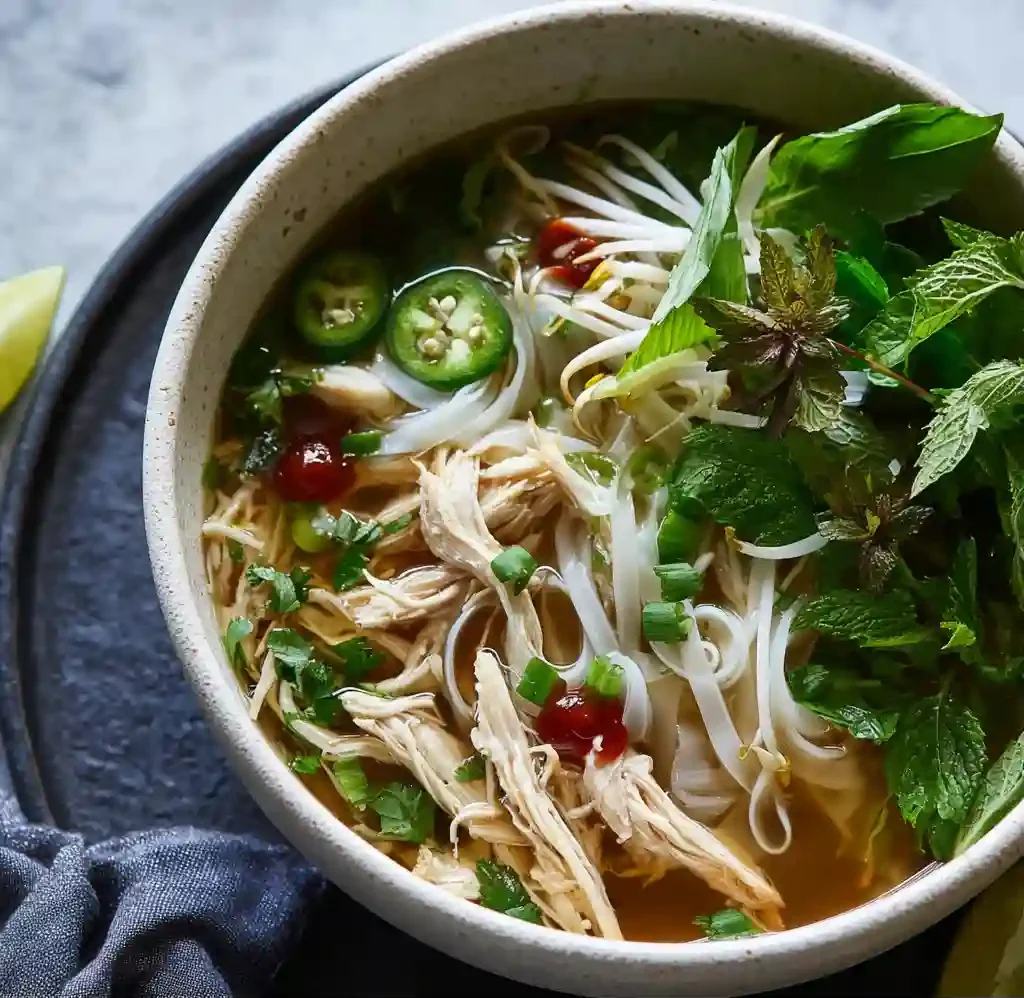
- Top with cilantro, Thai basil, mint, jalapeño slices, scallions, and bean sprouts.
- Serve with lime wedges and a drizzle of hoisin sauce or sriracha if desired.
Helpful Tips for Home Cooks
Keep the broth gently simmering rather than boiling hard once the chicken is added. This keeps the chicken tender and prevents the broth from becoming cloudy.
Taste the broth before serving. Different brands of chicken broth vary in saltiness, so small adjustments can make a big difference.
If the noodles have cooled before serving, a quick rinse with hot water can warm them again without overcooking them.
Common Mistakes to Avoid
Leaving the spices in the broth too long can make the flavor too strong. Removing them once the chicken finishes cooking keeps the balance pleasant.
Another mistake is overcrowding the bowl with noodles. A modest portion works best so the broth remains the star of the dish.
Adapting the Recipe
Simple Ingredient Swaps
If Thai basil is difficult to find, regular basil works well as a substitute. It brings a similar fresh herbal note.
Serrano peppers or Fresno chiles can replace jalapeños if you prefer a slightly different heat level.
Some people also enjoy adding thin slices of onion or extra herbs for additional freshness.
Adjusting to Personal Preferences
Everyone tends to build their bowl of pho differently. Some prefer more noodles, while others focus on extra herbs or sprouts.
The toppings allow each person to shape their bowl to their own taste. A squeeze of lime adds brightness, while hoisin or sriracha brings sweetness or heat.
Serving & Enjoyment
Chicken pho feels perfect for evenings when you want something warm and comforting but not too heavy. The broth is light yet deeply flavorful, and the fresh herbs keep every bite balanced.
Set the bowls on the table alongside plates of herbs, sprouts, and lime wedges. Let everyone add their own toppings. The meal becomes relaxed and interactive, which often leads to longer conversations and slower eating.
That simple moment around the table is part of what makes pho special.
Storage & Leftovers
If you have leftover pho, store the broth and noodles separately when possible. This helps keep the noodles from absorbing too much liquid.
The broth and chicken will keep well in the refrigerator for several days. When reheating, warm the broth gently on the stove and add fresh noodles and toppings when serving again.
The herbs are best added fresh, so the bowl still feels bright and lively.
Frequently Asked Questions
Can I use rotisserie chicken instead of cooking chicken breasts?
Yes, rotisserie chicken can work if you want to save time. Simply warm the shredded chicken in the broth before serving so it absorbs the flavors.
What noodles should I use for pho?
Traditional pho uses rice noodles. Look for flat rice noodles labeled for pho or rice stick noodles at most grocery stores.
Can I make the broth ahead of time?
Yes. The broth can be prepared earlier in the day or even the day before. When ready to serve, warm it again and add the chicken and noodles.
How spicy is this dish?
The broth itself is mild. The heat usually comes from toppings like jalapeños or sriracha, so you can easily adjust the spice level to your preference.
Conclusion
A bowl of easy chicken pho shows that comforting food does not always require complicated steps or long hours in the kitchen. With a handful of spices, tender chicken, and fresh herbs, the flavors come together in a way that feels warm and satisfying.
Whether you’re making it for a quiet evening at home or sharing it with family at the table, this recipe offers a calm and flavorful way to enjoy a classic dish. The steam, the aroma, and the fresh toppings all come together to create a bowl worth slowing down for.

Easy Chicken Pho
Ingredients
Method
- Add chicken broth to a medium saucepan or pot (that has a lid). Add the ginger, scallions, cloves, star anise, and 1/4 teaspoon of salt. Bring to a boil over high heat. Once boiling, add the chicken, reduce heat slightly, and cover. Simmer for 15-20 minutes or until chicken is cooked through. Remove chicken from broth and let sit until cool enough to handle. Shred with two forks (or just use your hands to make it easy!). Discard the ginger, scallions, cloves, and star anise. Add the hoisin and whisk to combine. Season to taste with the additional 1/4 teaspoon of salt if desired (you might even need more than that depending on your chicken broth).
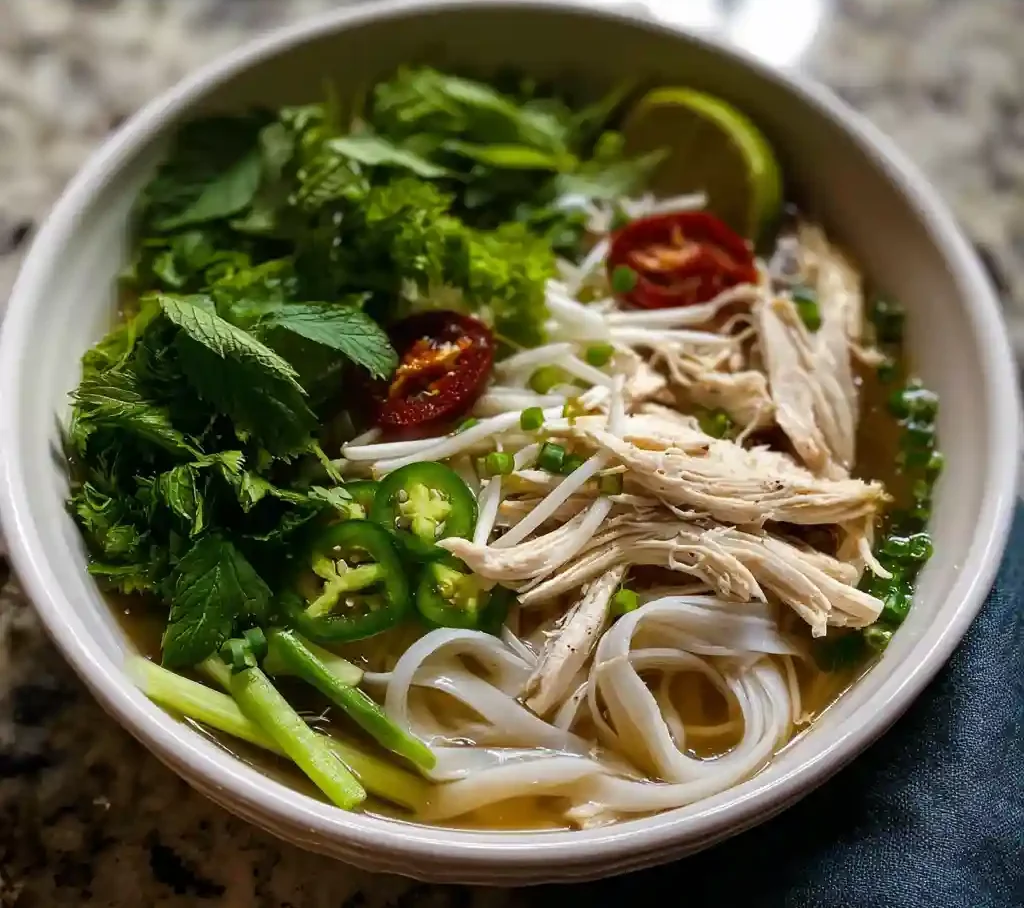
- Place the shredded chicken back into the pot and bring to a simmer if it needs to be heated through again. Ladle into bowls and top with a handful of rice noodles, cilantro, Thai basil, mint, jalapeño slices, scallions, and bean sprouts. Serve with lime wedges and a drizzle of hoisin and sriracha, if desired.
Notes
*You can use serrano peppers or fresno chiles in place of jalapeños if desired!