
A bowl of Pasta Primavera feels like a small celebration of fresh vegetables. The colors alone can brighten a table, and the aroma of garlic, olive oil, and herbs drifting from the kitchen makes the whole house feel welcoming.
This dish has always felt like a reminder that simple ingredients can come together in a really satisfying way. Nothing about it is complicated. A handful of fresh vegetables, good pasta, a bit of cheese, and a splash of lemon are all it takes to build something that tastes lively and comforting at the same time.
Many home cooks turn to Pasta Primavera when they want something that feels fresh but still filling. It works on a busy weeknight, yet it also feels right when you want to linger over dinner with family or friends.
The Story Behind This Vegetable-Filled Pasta
A dish that celebrates fresh ingredients
Pasta Primavera is often the kind of meal that grows out of what’s already in the kitchen. A zucchini sitting in the fridge, a bunch of asparagus that needs to be used, and a handful of cherry tomatoes can easily find their way into the pan.
That’s part of what makes the dish feel so relaxed. There’s no pressure for perfection. You simply cook the pasta, sauté a few vegetables, and bring everything together with olive oil, herbs, and cheese.
Over time, many cooks develop their own rhythm with this meal. Some add more herbs. Others enjoy a little extra lemon. But the heart of the dish stays the same: tender pasta tossed with vibrant vegetables and fresh flavor.
Why this meal fits everyday life
Life gets busy. Some evenings leave very little time for elaborate cooking. Pasta Primavera works well on nights like that.
The vegetables cook quickly, and the pasta finishes while everything else comes together in the pan. There’s very little waiting around, and cleanup stays simple too.
Even better, it’s a meal that feels balanced. The pasta brings comfort, while the vegetables add freshness and color. That combination makes it a dish people often return to again and again.
Why Pasta Primavera Works So Well
Bright flavors that balance each other
The flavor of Pasta Primavera comes from a few simple layers.
Garlic warms the olive oil and gives the vegetables a gentle savory base. Zucchini and yellow squash soften quickly and add a mild sweetness. Asparagus brings a slight crispness, while cherry tomatoes burst with a bit of natural juice as they cook.
A squeeze of lemon wakes everything up. The citrus cuts through the richness of the cheese and olive oil, giving the pasta a bright finish.
Pecorino cheese adds a salty, slightly sharp flavor that ties everything together. Then fresh basil and tarragon bring a fragrant herbal note that makes the whole bowl smell wonderful.
A recipe that feels dependable
One of the reasons cooks love this recipe is how forgiving it is.
The vegetables don’t need perfect timing. If they cook a little longer, they simply become more tender. If you prefer them with a bit of bite, you can keep the sauté short.
Pasta Primavera also adapts easily to what’s on hand. If you have extra herbs, you can add them. If you like a little heat, a pinch of red pepper flakes adds a gentle kick.
It’s the kind of meal that doesn’t demand precision. Instead, it welcomes a relaxed approach.
Making Pasta Primavera at Home
Ingredients
10 ounces penne pasta
2 tablespoons extra-virgin olive oil, plus more for drizzling
4 garlic cloves, sliced
1 yellow squash, sliced into thin half-moons
1 zucchini, sliced into thin half-moons
1 bunch asparagus, chopped into 1-inch pieces
1 cup cherry tomatoes, halved
1 cup thinly sliced red onion
1 teaspoon sea salt
½ cup frozen peas, thawed
¾ cup grated pecorino cheese
3 tablespoons fresh lemon juice
Red pepper flakes
1 cup fresh basil leaves, plus more for garnish
¼ cup fresh tarragon, optional
Freshly ground black pepper
Instructions
Bring a large pot of salted water to a boil. Cook the penne pasta according to the package directions until it reaches an al dente texture. Drain the pasta and toss it with a light drizzle of olive oil so the pieces do not stick together.
Warm the olive oil in a large deep skillet over medium heat. Add the sliced garlic, yellow squash, zucchini, asparagus, cherry tomatoes, red onion, sea salt, and several grinds of black pepper. Sauté the vegetables for about three to four minutes, until they soften while still holding their shape.
Add the cooked pasta to the skillet along with the thawed peas, grated pecorino cheese, fresh lemon juice, and a pinch of red pepper flakes. Toss everything together until the pasta and vegetables are evenly coated.
Stir in the basil leaves and the tarragon if you decide to include it.
Taste and adjust the seasoning if needed. Finish the dish with extra basil on top and serve.
Helpful Tips for Cooking This Dish
Small choices that make a difference
A few simple habits can make Pasta Primavera even more enjoyable to cook.
Cut the vegetables into similar sizes so they cook evenly. Thin half-moon slices for the squash and zucchini work especially well because they soften quickly in the skillet.
Use a large pan for the vegetables. Crowding them can trap steam and make them soft rather than lightly sautéed.
Also, keep the pasta slightly firm. When the pasta finishes cooking, it will spend another minute in the skillet with the vegetables, which helps it absorb flavor.
Gentle guidance for common mistakes
Sometimes the vegetables can become too soft if the heat is too low. A steady medium heat helps them cook quickly while keeping their color and texture.
Another small detail is the lemon juice. Add it near the end so the bright flavor stays fresh.
Finally, taste before serving. A small pinch of salt, another squeeze of lemon, or a little extra cheese can make the whole dish come together beautifully.
Ways to Adapt Pasta Primavera
Simple variations
Many cooks enjoy making small changes to this dish depending on what’s in the kitchen.
You could add mushrooms for a deeper flavor or a handful of spinach for extra greens. Broccoli florets also fit naturally with the other vegetables.
Some people like to swap the pasta shape as well. While penne works nicely, other short pasta shapes hold the vegetables just as well.
Adjusting for different preferences
Herbs can shift the personality of the dish. Basil gives a sweet, fresh aroma, while tarragon brings a slightly delicate, almost floral note.
If you enjoy a bit of spice, a larger pinch of red pepper flakes warms the dish without overpowering it.
And if someone prefers a stronger cheese flavor, adding a little extra pecorino right before serving can deepen the taste.
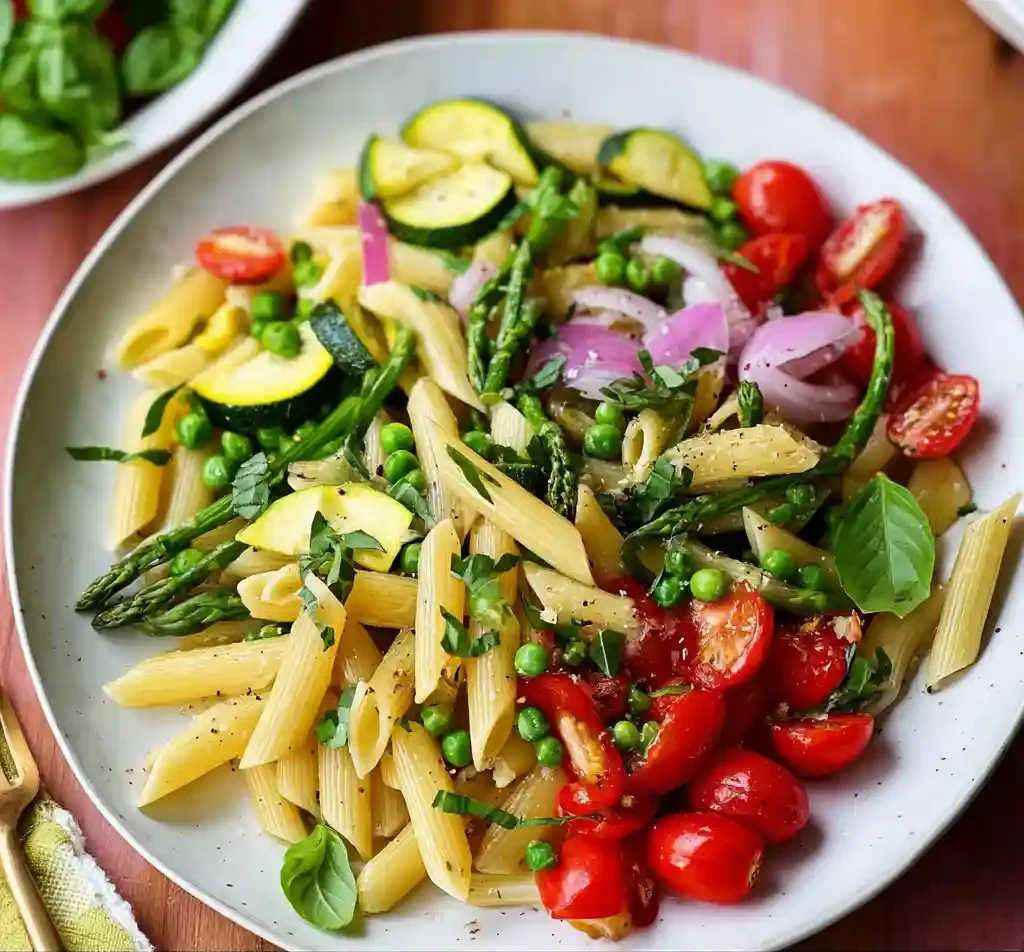
Serving and Enjoying the Dish
Pasta Primavera works in many different settings.
It can be a relaxed weeknight dinner after a long day. The colorful vegetables make it feel fresh even when you want something comforting.
It also fits nicely on a table shared with friends. A big bowl of pasta in the center invites everyone to help themselves, and the bright vegetables look beautiful against the pasta.
Sometimes the best way to enjoy it is simply with a quiet evening, a warm bowl, and a few extra basil leaves scattered on top.
Storing and Reusing Leftovers
Leftover Pasta Primavera keeps well in the refrigerator when stored in a sealed container.
When reheating, a small splash of water or olive oil helps loosen the pasta so it warms evenly. Heat it gently on the stove or in the microwave.
The vegetables may soften slightly after chilling, but the flavors remain pleasant and comforting.
Some people even enjoy turning leftovers into a quick lunch the next day by adding a little extra lemon juice and fresh herbs before serving.
Frequently Asked Questions
What does “primavera” mean in Pasta Primavera?
The word “primavera” means “spring” in Italian. The name reflects the fresh vegetables that usually appear in the dish.
Can I use different vegetables in Pasta Primavera?
Yes. This dish adapts easily to many vegetables. Broccoli, mushrooms, spinach, or bell peppers can work well alongside the pasta.
Is Pasta Primavera served hot or cold?
Most people serve it warm right after cooking. However, leftovers can also be enjoyed slightly chilled or at room temperature.
What pasta shapes work best for Pasta Primavera?
Short pasta shapes like penne, fusilli, or farfalle work nicely because the vegetables and sauce cling to the ridges and curves.
Closing Thoughts
Pasta Primavera shows how satisfying a simple meal can be. A handful of fresh vegetables, fragrant herbs, and tender pasta come together in a way that feels both light and comforting.
Cooking it doesn’t require much fuss. The ingredients speak for themselves, and the process moves quickly from stovetop to table.
Sometimes the most memorable meals are the ones that feel easy to make and easy to share. A bowl of Pasta Primavera often becomes exactly that kind of meal.
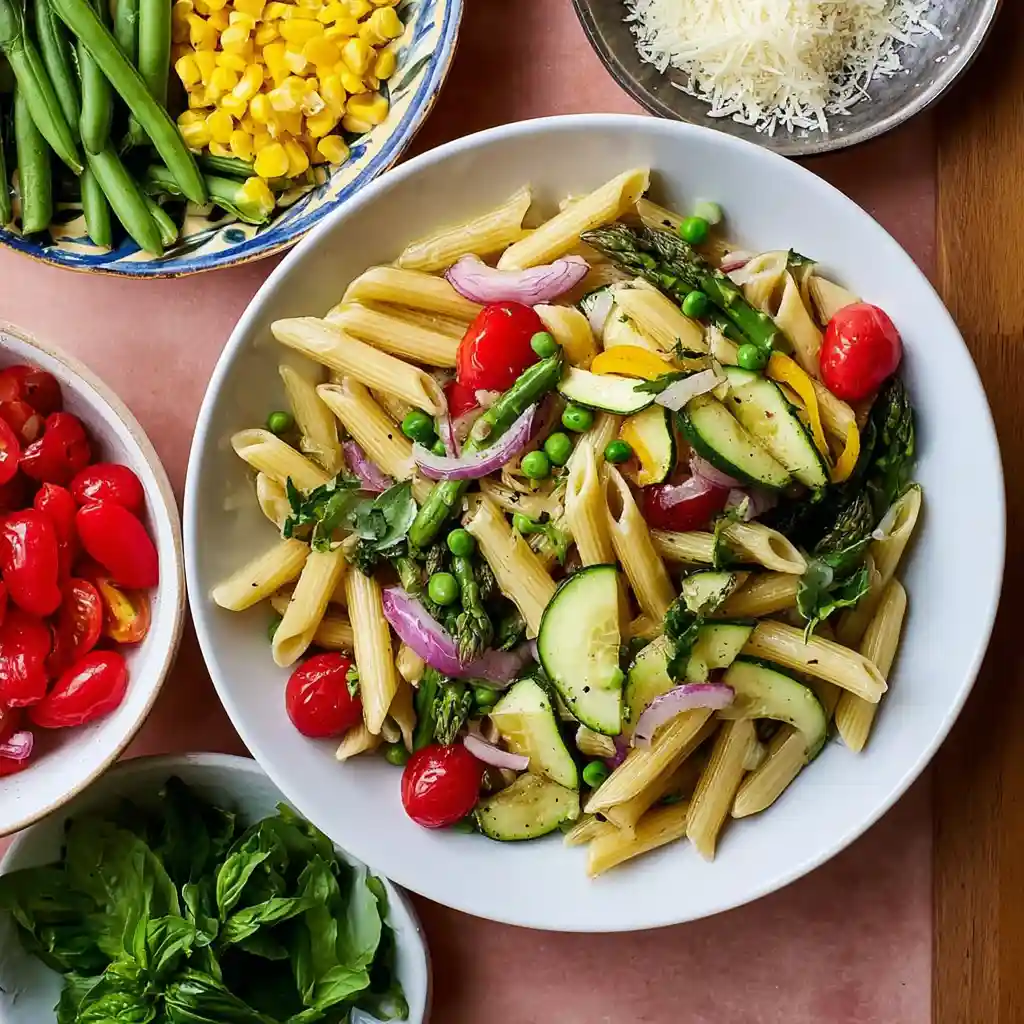

Pasta Primavera
Ingredients
Method
- Bring a large pot of salted water to a boil. Prepare the pasta according to the package instructions, cooking until al dente. Drain and toss with a drizzle of olive oil to prevent sticking.
- Heat the oil in a large, deep skillet over medium heat. Add the garlic, squash, zucchini, asparagus, tomatoes, onion, salt, and several grinds of pepper and sauté for 3 to 4 minutes, or until the vegetables are tender.
- Add the pasta, peas, cheese, lemon juice, and a pinch of red pepper flakes and toss to combine. Stir in the basil and tarragon, if using.
- Season to taste, garnish with more basil, and serve.