
There’s something joyful about baking a bread that surprises people. Focaccia is usually savory, sometimes topped with rosemary or roasted garlic. But one morning, staring at a bowl of fresh blueberries and a lively sourdough starter, I wondered what would happen if I took this rustic bread in a sweeter direction. I added lemon juice for brightness, blueberries for bursts of sweetness, and a tangy glaze to finish it all off.
What came out of the oven was golden, buttery, and dotted with deep pockets of soft fruit. The edges crisped beautifully, and the inside stayed tender, with just enough chew from the sourdough. This recipe has quickly become a favorite for brunches, showers, and quiet mornings at home. It feels both fresh and familiar, which is why I think you’ll love it too.
From Basic Dough to Bakery-Worthy: The Story Behind This Stunning Focaccia
When a classic focaccia met sourdough starter
Most focaccia recipes are made with instant yeast and come together in just a few hours. But if you’ve worked with sourdough before, you know it rewards patience. Using a wild yeast starter in this blueberry lemon focaccia brings a richness and depth you just don’t get from commercial yeast. It makes the bread chewier, more flavorful, and better at holding moisture.
The idea came from a craving for something that tasted like a cross between bread and pastry, without being either. I didn’t want a cake. I didn’t want a flatbread. I wanted something that could be both a centerpiece and a comfort. The sourdough starter gave the structure, and the lemon gave the lift.
Lemon and blueberry in focaccia? Yes, and here’s why it works
At first glance, this combination seems unexpected. Focaccia isn’t usually sweet. But when made with care, the balance of tart lemon juice, fresh berries, and buttery dough creates something exciting. It’s not dessert, but it’s not your average bread either.
Blueberries soften as they bake, melting into the dimples and edges of the focaccia. The lemon juice adds brightness and helps tenderize the dough during fermentation. The glaze at the end brings everything together without making it overly sweet. If you’ve ever had a bakery-style lemon loaf, imagine that vibe in focaccia form, but with better texture and a golden, crisp bottom.
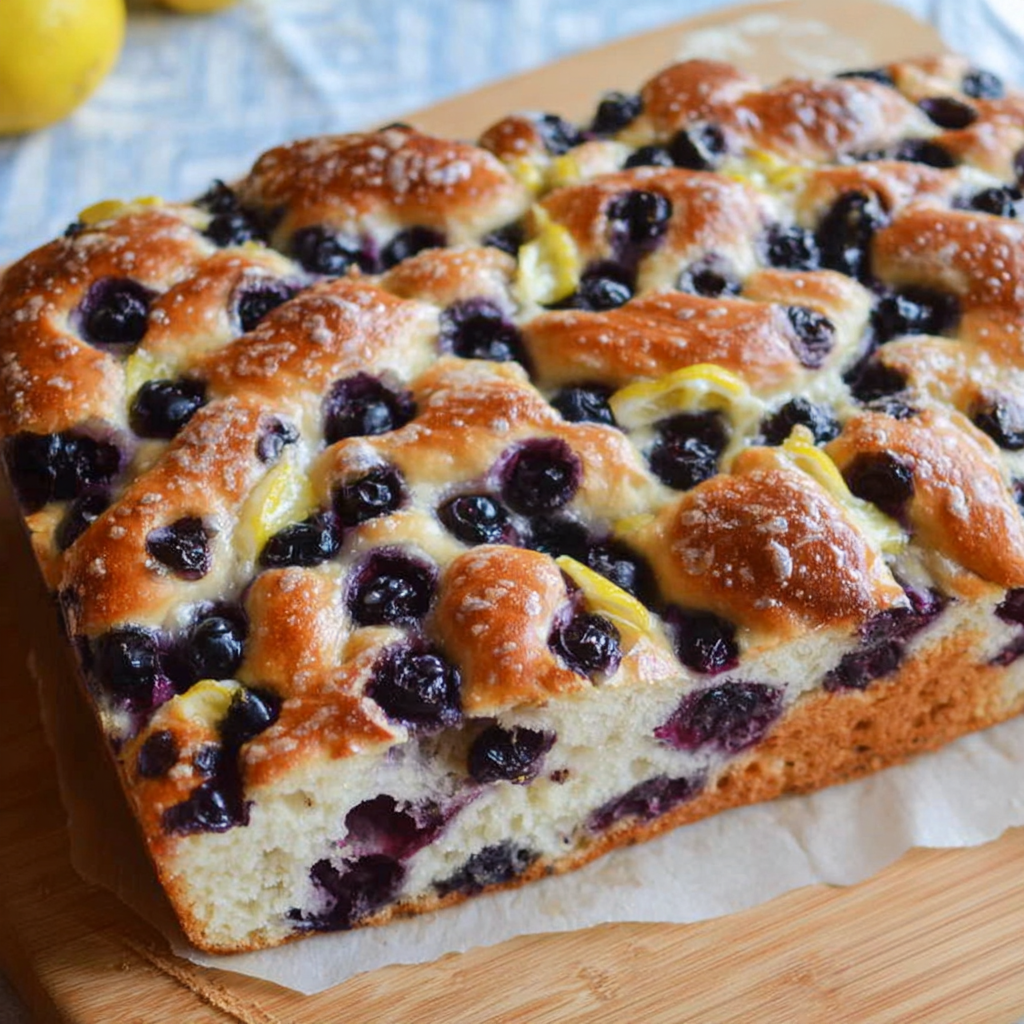

Easy Sourdough Blueberry Lemon Focaccia Bread
Ingredients
Equipment
Method
- 4-6 hours before you are ready to mix the dough, feed the sourdough starter a ratio of 1:1:1, or equal parts flour, water, and starter, and allow it to come to its peak. The exact timing of when it comes to its peak will vary depending on the temperature of your kitchen and the strength of your starter.
- Mix the Dough
- Add 100 g (1/2 cup) active sourdough starter, 500 g (4 cups) flour, 400 g (1 2/3 cups) water, 10 g (2 tsp) salt, 3 tbsp lemon juice, 3 tbsp lemon zest, and 50 g (1/4 cup) sugar to a large bowl and combine using a Danish dough whisk until fully mixed. Cover the bowl and let the dough rest at room temperature for 30 minutes to let the flour hydrate.
- Do a set of stretches and folds. Grab the side of the dough along the side of the bowl, lift it straight up, and then fold it onto itself into the middle of the dough. Rotate the bowl a quarter of a turn and repeat along the sides of the bowl for a total of 12-15 stretches. Cover the bowl and allow to rest for 30 minutes. This completes one set of stretch and folds.
- Continue stretching and folding for a total of 3 sets of stretch and folds. From the first set of stretch and folds to the last, the dough will transform from a sticky dough that covers your hands to an elastic dough with minimal sticking.
- Bulk Fermentation or First Rise
- After the last set of stretch and folds, cover the bowl and let rest in a warm spot in the kitchen to bulk ferment, roughly 3-6 hours.
- (Read text above for more information on what to look for when the dough is done bulk fermenting)
- Cold Ferment
- Cover the bowl and refrigerate overnight.
- Shape and Second Rise
- The next morning, prepare the pan by placing a piece of parchment paper into the bottom of the baking pan and drizzle 30 g (2 tbsp) olive oil evenly over the parchment paper.
- Using a bowl scraper, turn the dough out into the pan. Rub a bit of olive oil onto your fingers and stretch and pull the dough to fit the pan.
- Cover the pan with a tea towel or a bit of plastic wrap and place in a warm place for 4-5 hours. During this time, the dough will have visibly risen with plenty of air bubbles showing beneath the surface.
- The exact time will largely depend on the temperature of your kitchen. If your kitchen is cool, place the pan in the oven with the light on to create a warmer environment. Be sure to remove it before preheating the oven.
- Dimple and Bake
- Preheat oven to 400 degrees.
- Sprinkle blueberries over the top of the dough.
- Pour melted butter evenly over the top of the dough.
- Press your fingertips into the dough, creating dimples across the entire pan.
- Place into the oven and bake for 30-40 minutes. The focaccia is done when the top is a light golden brown and the internal temperature reads 200 degrees.
- Lemon Glaze
- While the bread is baking, prepare the glaze. Juice a lemon and add to a small bowl. In a separate small bowl, whisk 2-3 tablespoons lemon juice and 130 g (1 cup) powdered sugar until smooth. Use more lemon juice, if needed, to create a smooth, pourable lemon glaze.
- Remove the focaccia from the pan and place onto a wire rack to cool, discarding the parchment paper.
- Allow the bread to cool to room temperature before drizzling the glaze over the top of the sourdough blueberry lemon focaccia bread.
- Store
- Sourdough blueberry lemon focaccia bread is best the same day you bake it. If you do have leftovers, store them in an airtight container at room temperature and enjoy them within a day or two.
Notes
Calories: 232.3kcal
Carbohydrates: 45.7g
Protein: 5g
Fat: 3.2g
Saturated Fat: 0.4g
Polyunsaturated Fat: 0.6g
Monounsaturated Fat: 1.9g
Sodium: 324.2mg
Potassium: 49.3mg
Fiber: 1.1g
Sugar: 15.1g
Vitamin A: 1.5IU
Vitamin C: 3.1mg
Calcium: 7.7mg
Iron: 0.4mg
Why This Sourdough Focaccia Stands Out
The sourdough difference: chew, structure, and flavor
Sourdough brings a lot more to this focaccia than just a rise. It builds a stronger, more elastic dough that can trap air pockets during baking and hold juicy blueberries without collapsing. That strength comes from long fermentation and a well-fed starter. You end up with a bread that is chewy but soft, with an open crumb and light tang that balances the lemon and fruit.
Unlike yeasted focaccia, sourdough develops flavor slowly. The longer fermentation gives the dough a deep, slightly nutty profile that plays well with both sweet and savory toppings. This makes it an ideal base for something like lemon and blueberry, where you want complexity without too much sweetness.
If your starter is strong and active, the dough will rise beautifully and bake into a focaccia that’s golden on the outside and soft inside. That texture—pillowy with just enough bite—is what sets it apart from the quick-rise versions. Every bite offers a mix of chew, crisp crust, and pockets of fruit.
What lemon juice and zest do for focaccia dough
Lemon juice plays a quiet but important role in this recipe. It adds a bit of acid, which helps relax the gluten slightly and soften the final bread. That makes the crumb more tender without losing the structure needed to support a generous topping.
The zest brings in the citrus aroma that defines this focaccia. It’s not overpowering. It lingers just enough to make the loaf feel fresh and light. When combined with sugar, the lemon flavor spreads evenly through the dough and complements the sour notes from the starter.
Lemon is also what keeps this from feeling like a dessert. The brightness cuts through the richness of the butter and the natural sweetness of the blueberries. It’s the kind of balance that keeps you coming back for another slice.
How to Make Sourdough Blueberry Lemon Focaccia Bread Step-by-Step
Prep, stretch, ferment: key parts you can’t skip
Focaccia may seem simple, but with sourdough, timing and technique matter. It starts with a well-fed starter. You’ll want to give it a good feeding about 4 to 6 hours before mixing the dough, so it’s active and bubbly when you use it.
To mix the dough, combine the flour, water, salt, sugar, lemon juice, zest, and starter in a large bowl. A Danish dough whisk makes this easier, but your hands work too. Once it’s mixed, let the dough rest for 30 minutes. This rest allows the flour to absorb water, which improves structure.
Next come the stretch and folds. You’ll lift and fold the dough in the bowl to strengthen the gluten. Do this three times over 90 minutes. By the last round, your dough will feel smoother and more elastic. After this, cover the bowl and let it rise at room temperature for 3 to 6 hours. When it’s puffy and expanded, it’s ready for the cold ferment. An overnight rest in the fridge deepens the flavor and makes the dough easier to handle the next day.
Tips for baking, dimpling, and perfect golden edges
In the morning, line a 9×13 pan with parchment and drizzle olive oil generously on the bottom. This oil helps crisp the base and prevents sticking. Turn the cold dough into the pan, then gently stretch it to fit. It may resist at first. Let it rest a few minutes and try again.
Cover and let the dough rise in a warm place for 4 to 5 hours. It should show bubbles just under the surface. Then, scatter fresh blueberries across the top and pour melted butter evenly over everything. Use oiled fingers to press deep dimples across the dough, pushing berries gently into place.
Bake at 400°F for 30 to 40 minutes. You’re looking for a light golden crust and an internal temperature of around 200°F. The edges will be crisp, and the top will have darkened where the butter and sugar met the heat.
Glaze, Storage, and Creative Variations
The finishing touch: lemon glaze you’ll want on everything
This glaze is simple, but it brings the whole focaccia together. Once the bread is cool, whisk powdered sugar with lemon juice until it’s smooth and pourable. You can adjust the texture by adding a little more juice if needed. Then drizzle it generously over the surface of the bread.
What makes this glaze special is how it soaks into the top layer of the focaccia. It doesn’t just sit on top. It mingles with the blueberries and buttery dimples, adding a soft, tart contrast that brightens every bite. The glaze also gives the bread a light sheen and a polished finish that looks as good as it tastes.
This isn’t a thick frosting. It’s thin enough to run slightly and coat the crust without hiding the golden color. And while it adds sweetness, it doesn’t overpower the sourdough or the lemon in the dough itself. It enhances rather than covers.
Twist it up: variations for every season
Once you’ve made the base recipe, it’s easy to make small changes that keep it feeling new. Try substituting the blueberries with other fresh berries like raspberries or blackberries. Just be sure to use firm fruit that won’t break apart too easily when pressed into the dough.
For a savory version with lemon, skip the glaze and berries. Add thinly sliced red onion, chopped rosemary, or a sprinkle of sea salt. The lemon zest in the dough will still bring a subtle brightness that works well with savory toppings.
You can also use orange juice and zest in place of lemon if you want a warmer citrus flavor. For added crunch, scatter sliced almonds or pistachios on top before baking. A light honey drizzle instead of lemon glaze also gives a beautiful finish.
If you’re serving this focaccia for brunch or a gathering, slice it into squares and let people help themselves. It’s delicious on its own or served alongside yogurt, tea, or sparkling water.
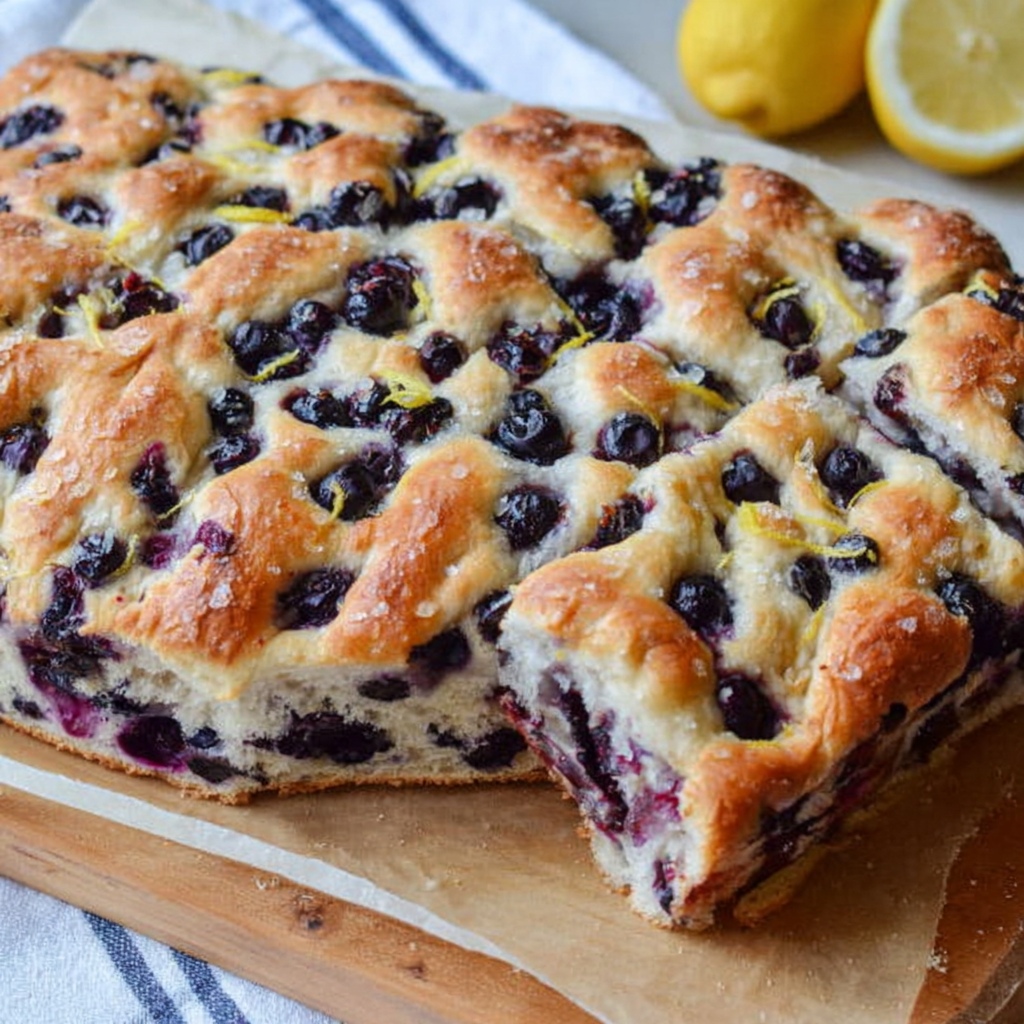
Frequently Asked Questions About Sourdough Blueberry Lemon Focaccia Bread
Can I use my sourdough to make focaccia?
Yes, and it works beautifully. A bubbly, active sourdough starter gives focaccia a chewy texture and rich flavor. While traditional focaccia relies on instant yeast for speed, sourdough slows the process down and adds complexity. With enough time to ferment and rise, your focaccia will be full of air pockets, crisp on the edges, and tender in the center. Just make sure your starter is well fed and active before using it.
What is the secret to a fluffy focaccia?
Fluffy focaccia comes from two main things: proper fermentation and high hydration. Letting your dough rise fully, both during bulk fermentation and the second rise, builds structure and traps gas that creates those signature airy holes. Gentle stretch and folds help strengthen the dough without overworking it. The dough also needs to be wet enough to stay soft inside while still firm enough to hold its shape, and this recipe hits that balance with a 400 g to 500 g water to flour ratio.
What does lemon juice do to sourdough?
Lemon juice adds a bright, tart flavor, and it also has a subtle effect on the dough. Its acidity can slightly soften the gluten structure, making the final bread a bit more tender. In sourdough recipes like this, lemon juice works alongside the natural fermentation, enhancing the overall flavor while balancing the starter’s tang. It does not kill the yeast or harm the dough, but instead helps highlight both the citrus and the sourdough notes without turning the bread overly sharp.
What is the difference between sourdough bread and focaccia bread?
The key differences are texture, shape, and baking method. Sourdough bread is typically a round or oval loaf with a chewy crust and open crumb, usually risen in a banneton or Dutch oven and scored before baking. Focaccia is flatter, baked in a pan, and generously topped with olive oil and various toppings. This sourdough blueberry lemon focaccia blends the two, giving you sourdough’s depth and chew in a focaccia’s soft, golden form, so you get the best of both worlds.
Conclusion: A New Favorite Focaccia for Citrus-Lovers and Sourdough Fans Alike
Sourdough blueberry lemon focaccia bread brings together everything bakers love: deep flavor, beautiful texture, and an unforgettable finish. With each bite, you get the gentle chew of sourdough, the juicy pop of blueberries, the bright lift of lemon, and a sweet, citrusy glaze that ties it all together. It’s a bread that feels special but approachable. Rustic enough for a casual brunch, elegant enough for entertaining.
This recipe rewards time and care, but none of the steps are complicated. With the right rhythm—feed, mix, fold, ferment—you’ll end up with a golden, dimpled focaccia that’s as satisfying to make as it is to eat. Whether it’s your first time baking with sourdough or your fiftieth, this loaf brings something new to your kitchen. And most importantly, it’s just really good bread.