
Soft, buttery cookies with bright lemon and a gentle hint of lavender always feel a little special. Lemon Lavender Cookies bring together citrus freshness and floral warmth in a way that feels light but comforting at the same time. They look delicate, but they’re simple enough for a regular afternoon of baking.
In this article, I’ll walk you through how these cookies come together, why the flavors work so beautifully, and how to make them with confidence in your own kitchen.
A Little Story Behind These Cookies
A Small Batch That Turned Into a Favorite
The first time I baked lemon lavender cookies, I wasn’t trying to impress anyone. I just had a bowl of lemons on the counter and a small jar of culinary lavender tucked in the pantry. I wanted something different from the usual chocolate chip routine.
When the cookies came out of the oven, the kitchen smelled like sunshine and warm butter. The lemon felt cheerful. The lavender was soft and calm, not overpowering. I remember thinking, this is what early spring would taste like if it were a cookie.
Since then, they’ve become one of those recipes I reach for when I want something gentle and a little unexpected.
Why Lemon and Lavender Just Make Sense
Lemon brings brightness. Lavender brings depth. Together, they balance each other. The citrus keeps the floral notes from feeling too strong, and the lavender adds a quiet warmth that makes the cookies feel thoughtful and cozy.
They’re sweet, but not heavy. Soft, but not crumbly. And that glaze on top? It adds just enough tang to make you reach for another.
What Makes This Recipe Work So Well
The Balance of Texture and Flavor
These cookies start with:
- 2 ¼ cups / 270 g / 9.5 oz all-purpose flour, spooned and leveled
- 2 tbsp / 10 g / 0.6 oz cornstarch
- 1/2 teaspoon baking powder
The cornstarch keeps the texture tender. It softens the structure just enough so the cookies feel delicate instead of dense.
The dough gets its richness from:
- 2 sticks / 225 g / 8 oz salted butter, at cool room temperature
- 3/4 cup / 150 g / 5.3 oz granulated sugar
Then comes the flavor:
- 2 tbsp lemon zest (from about 3 medium lemons)
- 2 tbsp dried culinary lavender buds
- 1 large egg, at a cool room temperature
The lemon zest carries most of the citrus flavor. It’s bright and fragrant. The lavender is mixed directly into the butter and sugar, so it infuses the dough evenly instead of sitting in pockets.
A Glaze That Ties It All Together
The glaze adds that soft finish:
- 1 ½ cups / 180 g / 6.3 oz powdered sugar, sifted
- 2 to 3 tbsp fresh lemon juice
- 1/2 tsp lavender extract (optional)
- 3 to 4 drops of purple food coloring
- lavender buds, to garnish, if desired
- lemon zest, to garnish, if desired
It’s thick but pourable. It sets into a smooth layer that adds sweetness and a gentle tang without overpowering the cookie itself.
Making Lemon Lavender Cookies at Home
Step-by-Step Instructions
Preheat your oven to 350°F / 180°C / gas mark 4. Line 2 baking sheets with parchment paper.
In a small bowl, whisk together the flour, cornstarch, and baking powder. Set aside.
In a large mixing bowl, cream the butter, sugar, lemon zest, and lavender using a stand mixer fitted with the paddle attachment or an electric mixer. Beat on medium speed until light and fluffy, about 2 to 3 minutes. Scrape down the sides of the bowl as needed.
Add the egg and mix until fully combined.
Reduce the speed to low and add the dry ingredients. Mix just until combined. The dough may seem slightly dry, and that’s okay.
Use a small cookie scoop to portion 1-tablespoon-sized balls of dough onto the prepared baking sheets. Leave about 2 inches / 5 cm between each one.
Gently press each ball down with your palms until about 1/3 inch / 1 cm thick.
Bake for 12 to 15 minutes. The cookies are ready when the centers are just set and the edges look lightly golden. Bake one sheet at a time for even results.
Let the cookies cool on the baking sheet for 5 minutes. Then transfer them to a wire rack and allow them to cool completely.
To make the glaze, whisk together the powdered sugar, lemon juice, and lavender extract in a medium bowl. The glaze should be thick but easy to spoon. Add a few drops of purple food coloring and stir until you like the shade.
Spoon glaze over each cooled cookie. If you like, sprinkle with lavender buds and a little lemon zest. Let the glaze set for about 30 minutes before serving.
Gentle Tips for Better Results
Zest the lemons before juicing them. It’s much easier that way.
Measure your flour carefully. Too much flour can make the cookies dry. Spoon and level it into your measuring cup instead of packing it down.
Use fresh lemon juice. Bottled juice won’t give the same bright flavor.
Keep an eye on baking time. Every oven runs a little differently. Start checking at around 10 minutes so they don’t overbake.
If you want a very smooth glaze, strain the lemon juice before mixing it with the powdered sugar.
Ways to Make Them Your Own
Subtle Changes That Work Beautifully
If you prefer a lighter lavender flavor, reduce the amount slightly and rely more on the lemon zest.
If you want extra citrus punch, add a tiny bit more zest to the dough or glaze.
You can skip the food coloring if you prefer a natural look. The cookies taste just as lovely without the purple tint.
When to Bake These
These cookies feel right at home at spring gatherings, baby showers, brunch tables, or quiet weekends with tea. They’re also lovely wrapped in parchment and tied with twine as a homemade gift.
They look delicate, but they hold up well enough to travel.
Serving and Enjoying
Lemon Lavender Cookies shine on a simple white plate with a cup of tea or coffee. They feel calm and thoughtful.
They also work beautifully as part of a dessert spread. Their light flavor balances richer treats like brownies or chocolate cake.
I especially love them in the late afternoon, when the day slows down and the light starts to soften. There’s something peaceful about that combination of citrus and floral notes.

Storage and Leftovers
Store the cookies in an airtight container at room temperature for up to 4 days. Separate layers with sheets of wax paper to protect the glaze.
The glaze will firm up as it sits, but the cookies stay soft inside. If stacking them, make sure the icing has fully set first.
These don’t usually last long, but they keep their flavor and texture well for several days.
Frequently Asked Questions
Can I use fresh lavender instead of dried?
It’s best to use dried culinary lavender. Fresh lavender contains more moisture and can change the texture of the dough. Make sure the dried lavender is labeled for culinary use.
Why do my cookies seem dry?
Dry cookies often come from too much flour. Spoon and level your flour instead of scooping directly from the bag. Also, avoid overbaking. Pull them out when the centers are just set.
Can I skip the lavender extract in the glaze?
Yes. The lavender extract is optional. The cookies will still have floral flavor from the dried lavender in the dough.
Can I freeze these cookies?
You can freeze the unglazed cookies in an airtight container. Let them thaw at room temperature and then add the glaze fresh for the best texture.
Final Thoughts
There’s something quietly lovely about Lemon Lavender Cookies. They’re soft and buttery, bright with lemon, and gently floral without being overpowering.
They feel a little special, but they don’t ask for complicated steps or hard-to-find ingredients. Just simple mixing, careful baking, and a sweet glaze on top.
If you’re in the mood for something light, fragrant, and comforting, these cookies might be exactly what you need.
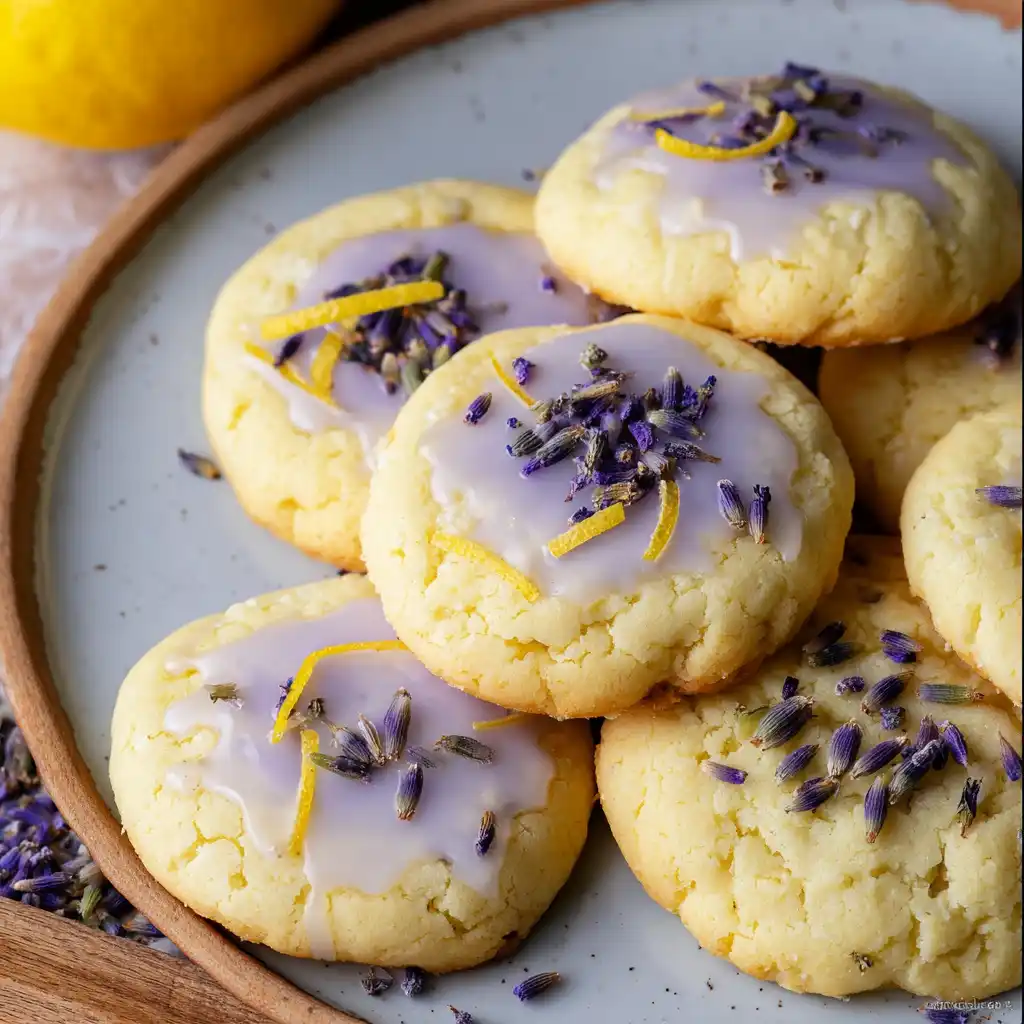

Lemon Lavender Cookie
Ingredients
Method
- Prepare for baking. Preheat your oven to 350°F / 180°C / gas mark 4. Line 2 baking sheets with parchment paper.
- Combine dry ingredients. In a small bowl, whisk together the flour, cornstarch, and baking powder. Set aside.
- Beat butter and sugar. Using a large mixing bowl and a stand mixer fitted with the paddle attachment (or an electric mixer), cream the butter, sugar, lemon zest, and lavender (medium speed) until light and fluffy, about 2 to 3 minutes. Scrape down the sides of the bowl.
- Add egg. Mix in the egg until very well combined.
- Incorporate dry ingredients. Using low speed, add the flour mixture and mix until just combined. The dough will seem slightly dry.
- Scoop cookies. Use a small cookie scoop to drop 1-tablespoon-sized balls of dough onto the prepared baking sheets. Space the dough balls 2 inches / 5 cm apart.
- Flatten cookies. Gently flatten each ball with your palms until 1/3 inch / 1 cm thick.
- Bake. Bake the cookies for 12 to 15 minutes. The cookies are ready when the center is just set and the edges appear slightly golden. Bake only 1 cookie sheet at a time.
- Cool. Cool the cookies on the baking sheet for 5 minutes. Then, transfer the cookies onto a wire rack to cool completely.
- Mix glaze. In a medium bowl, whisk together the powdered sugar, lemon juice, and lavender extract. The consistency should be thick, but pourable. Tint the glaze with a few drops of food coloring.
- Decorate cookies. Spoon each cookie with glaze. If desired, sprinkle the cookies with lavender buds and lemon zest. Let the icing set for 30 minutes. Enjoy!
- Store. Store the cookies in an airtight container at room temperature for up to 4 days. Separate layers of cookies with sheets of wax paper.
Notes
- Zest before juicing: Always zest lemons before squeezing out the juice. It’s nearly impossible to do it the other way around!
- Measure flour accurately: The #1 baking mistake is adding too much flour. It will make cookies dry and dense. For the best results, weigh your flour with a digital kitchen scale. Otherwise, fluff, spoon, and level the flour into your measuring cup, but never pack it in.
- Watch the baking time: Each oven bakes differently, and oven temperatures are all over the place. What takes 10 minutes in one oven, needs 15 in another, and this is normal. So watch your cookies carefully and start checking on them at the 10-minute mark.
- Don’t use bottled lemon juice: Fresh lemon juice is the way to go here! The bottled variety doesn’t taste as good.
- Ultra-smooth consistency: For an ultra-smooth icing, strain the lemon juice through a fine-mesh strainer.
Amount Per Serving: Calories: 134Total Fat: 8gSaturated Fat: 5gTrans Fat: 0gUnsaturated Fat: 2gCholesterol: 27mgSodium: 72mgCarbohydrates: 15gFiber: 0gSugar: 6gProtein: 1g