
INTRODUCTION
Last winter, I tried making restaurant-quality ramen at home for the first time, and it completely changed how I think about weeknight dinners. The aroma of simmering broth filled my kitchen, and within 30 minutes, I had a steaming bowl that rivaled my favorite ramen shop. Homemade ramen isn’t just about saving money. It’s about creating something warm, nourishing, and deeply satisfying from scratch. You don’t need years of culinary training or exotic ingredients. With simple pantry staples and fresh components, anyone can master this beloved Japanese comfort food. This recipe breaks down every step so you can recreate that restaurant experience at home.
Why Homemade Ramen Wins Every Time
Fresh Ingredients Make the Difference
The biggest advantage of homemade ramen is ingredient quality. Fresh mushrooms add an earthy umami depth that dried or canned versions simply cannot provide. When you sauté baby bella mushrooms in butter and olive oil, they develop a golden-brown crust that releases natural flavors into your soup. Fresh garlic, ginger, and bok choy contribute vibrant tastes and textures that elevate each spoonful. Furthermore, using real chicken breast instead of mystery meat creates tender, flavorful protein that complements the noodles perfectly. These fresh components work together to build layers of taste that instant packets will never achieve.
Control Over Sodium and Nutrition
One of the smartest reasons to make homemade ramen is managing sodium levels. Traditional instant ramen packets contain excessive amounts of salt, often exceeding 1,500 mg per serving. By using low-sodium chicken broth and soy sauce, you cut sodium significantly while maintaining rich flavor. This recipe includes wholesome additions like bok choy, which provides vitamins A and C, plus fiber. The soft-boiled eggs add protein and healthy fats, while mushrooms contribute antioxidants and B vitamins. You’re not just eating a quick meal. You’re creating a balanced, nutritious dinner that supports your health goals without sacrificing the comforting taste you crave.
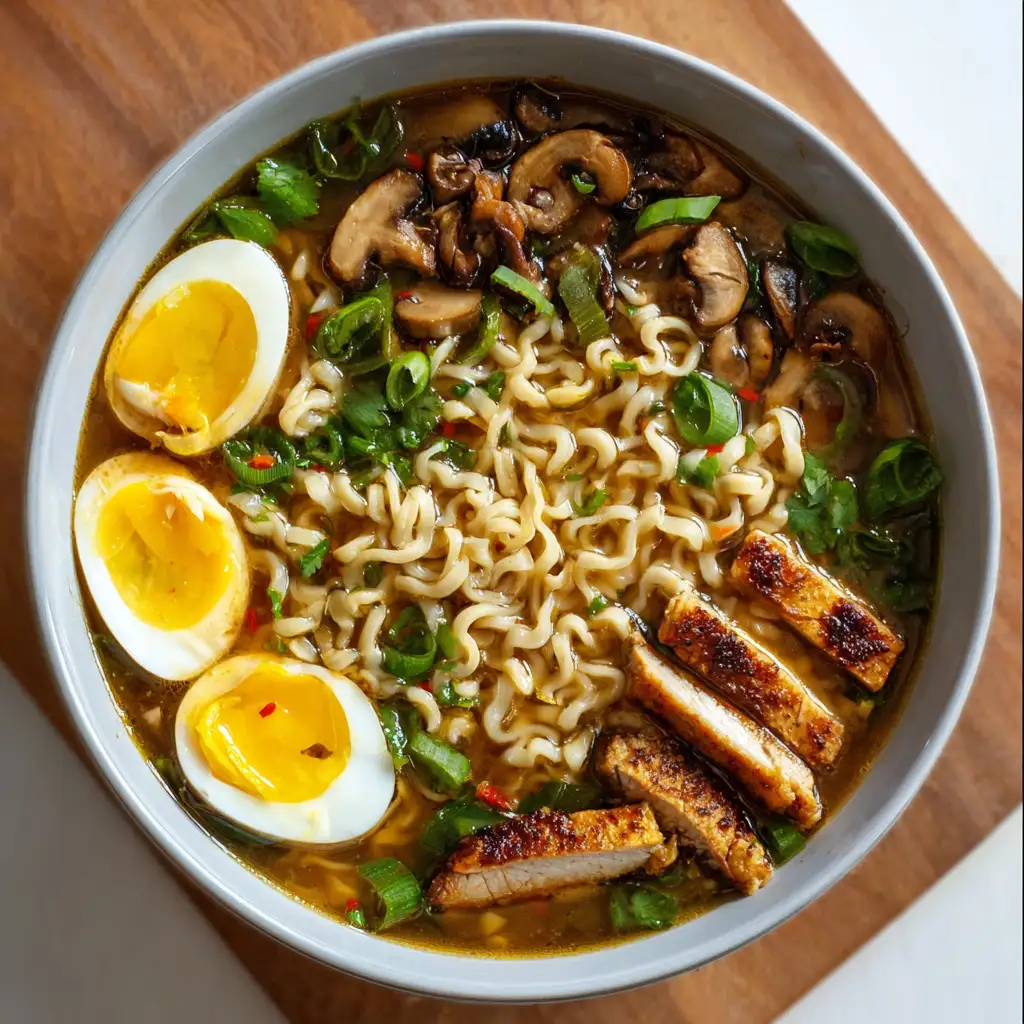

Homemade Ramen
Ingredients
Method
- Heat 1 tablespoon olive oil and 1 tablespoon of butter in a large soup pot over medium-high heat. Add the mushrooms. Sauté until golden, about 4 minutes. Remove and set aside so that they retain the color, flavor, and texture.
- Slice the chicken in half lengthwise to create 2 thinner slices. Cover with saran wrap and use the textured side of a meat mallet to pound it to ½ inch thick.
- Pat the chicken dry and season each side with salt and pepper.
- Heat remaining olive oil and butter in a large soup pot over medium-high heat. Sear the chicken in batches for 4-5 minutes per side, until a golden crust has developed. Set aside turn the heat off. Let the chicken rest for 10 minutes, then cut into strips of desired size.
- Add the wine and set the heat to medium. Use a silicone spatula to “clean” the bottom and sides of the skillet. Let the wine bubble gently and reduce by half, 4-5 minutes.
- Add the butter and garlic and cook for 2 minutes.
- Add the chicken broth, soy sauce, hot sauce, honey, sesame oil, and soup seasonings. Bring to a gentle boil and let the broth reduce and concentrate for 10 minutes while you soft boil eggs for serving (see notes for instructions).
- Bring the soup to a more rapid boil, add the Ramen, and cook for 1 minute. Reduce to a gentle simmer and add the Bok Choy along with the cooked mushrooms and chicken. Simmer until the noodles are done, about 3 minutes.
- Transfer to serving bowls and top with green onions, roughly chopped peanuts, and a soft-boiled egg.
Notes
- Submerge the eggs in 2 inches of cool water in a pot on the stove-top. Gradually bring them to a gentle boil.
- Set a timer for 6 minutes, use a slotted spoon to remove them immediately after.
- Rinse them under cool running water to stop the cooking process, then peel and slice in half lengthwise.
- Ramen: I use Maruchan or Top Ramen in this recipe but any variety of Ramen can be used. Save the seasoning packets to make my Ramen Noodle Salad!
- Note: If the ramen you use doesn’t have salt like Instant Ramen does, you can use regular chicken broth instead of low sodium.
- Sodium: The noodles in this soup have a decent amount of salt, there is a distinguishable shift in the salt flavor after they’ve cooked in the soup, so low sodium broth and soy sauce is important. If you don’t have that option, I would replace 1-2 cups of broth with water.
- Mushrooms: Cremini, (or baby portobella) mushrooms are best because they have a browner color and firmer texture than white button mushrooms, but white button can certainly be used as well. (Mushrooms add umami to this recipe but can be omitted for non-mushroom lovers.)
- Wine: Sauvignon Blanc is the best wine to use in this recipe, followed by Chardonnay, and then Pinot Grigio. Chicken broth can be used if you don’t cook with wine.
- Bok Choy: I like using Bok Choy (Chinese Cabbage) in this recipe, but kale and spinach are great options as well.
- Store in an airtight container and refrigerate for up to 3 days or freeze for up to 3 months. Leftovers do freeze/reheat well.
Essential Building Blocks of Perfect Ramen
The Five Core Components You Can’t Skip
The first essential ingredient is your noodle base. Instant ramen noodles work perfectly for quick preparation, but you can substitute fresh ramen noodles from Asian markets for a more authentic texture. Next comes your broth, which should be rich and flavorful. This recipe uses chicken broth enhanced with soy sauce, sesame oil, and white wine for depth. Your protein choice matters significantly. Tender chicken breast provides lean protein, while mushrooms add umami richness. Vegetables like bok choy introduce a fresh, slightly bitter contrast to the rich broth. Finally, garnishes such as soft-boiled eggs, green onions, and peanuts complete the bowl with varied textures and flavors.
Choosing the Right Noodles and Broth
Selecting quality noodles dramatically affects your homemade ramen experience. Standard instant ramen noodles cook quickly and absorb broth well, making them ideal for weeknight meals. However, fresh ramen noodles offer superior chewiness and a more authentic taste. For the broth, low-sodium chicken stock serves as the best base because it allows you to control saltiness. Adding dry white wine, preferably Sauvignon Blanc, creates acidity that balances the rich, savory elements. The combination of soy sauce and sesame oil introduces that signature umami flavor associated with restaurant ramen. Meanwhile, honey adds a subtle sweetness that rounds out the overall taste profile beautifully.
Step-by-Step Cooking Method
Preparing Your Protein and Vegetables
Begin by heating olive oil and butter in a large soup pot over medium-high heat. Add sliced baby bella mushrooms and sauté them for approximately four minutes until they develop a golden-brown color. Remove the mushrooms and set them aside to preserve their texture. Next, slice your chicken breast lengthwise into two thinner pieces, then pound them to half-inch thickness using a meat mallet. Pat the chicken completely dry and season both sides generously with salt and pepper. Sear the chicken in the same pot for four to five minutes per side until a golden crust forms. Let the cooked chicken rest for ten minutes before slicing it into strips. This resting period allows juices to redistribute throughout the meat, keeping it moist and tender.
Building Layers of Flavor
After removing the chicken, add dry white wine to the hot pot and use a spatula to scrape up the browned bits stuck to the bottom. This process, called deglazing, captures all the caramelized flavors from cooking the protein. Let the wine reduce by half, which concentrates its flavor and removes harsh alcohol notes. Then add butter and minced garlic, cooking for two minutes until fragrant. Pour in chicken broth, soy sauce, hot sauce, honey, sesame oil, and your seasonings. Bring everything to a gentle boil and let it reduce for ten minutes. This reduction concentrates the broth’s flavors, creating that rich, restaurant-quality taste in your homemade ramen.
Toppings and Serving Suggestions
Classic Toppings That Elevate Your Bowl
Soft-boiled eggs represent the most iconic ramen topping. To make them perfectly, submerge eggs in cool water and gradually bring them to a gentle boil. Set a timer for exactly six minutes, then immediately transfer them to cool running water. This method creates a jammy, golden yolk that enriches the broth when broken. Green onions add a sharp, fresh bite that cuts through the richness of the soup. Roughly chopped honey-roasted peanuts introduce an unexpected crunch and slight sweetness that complements the savory broth beautifully. Additionally, you can customize toppings based on personal preference. Nori sheets, corn kernels, bamboo shoots, or bean sprouts all make excellent additions to homemade ramen bowls.
Storage and Reheating Tips
Proper storage keeps your homemade ramen delicious for future meals. Transfer cooled soup to an airtight container and refrigerate for up to three days. For longer storage, freeze portions for up to three months. This recipe reheats exceptionally well, maintaining both flavor and texture. When reheating, warm the soup gently on the stovetop over medium heat, stirring occasionally to prevent scorching. If the broth seems too thick after refrigeration, add a splash of chicken broth or water to restore the proper consistency. Prepare fresh toppings like soft-boiled eggs and green onions when serving leftovers rather than storing them with the soup. This approach keeps your reheated homemade ramen tasting fresh and restaurant-quality.

FAQ Section
What are the 5 essential ramen ingredients?
The five essential ingredients for homemade ramen include quality noodles, flavorful broth, protein (such as chicken or pork), fresh vegetables, and garnishes. Noodles provide the base, while broth delivers the core flavor. Protein adds substance and heartiness to the bowl. Vegetables like bok choy or spinach contribute nutrition and freshness. Finally, garnishes such as soft-boiled eggs, green onions, and sesame seeds complete the authentic ramen experience with varied textures and visual appeal.
Is homemade ramen healthy?
Homemade ramen can be significantly healthier than instant versions when prepared thoughtfully. By using low-sodium broth and fresh ingredients, you control salt content and avoid artificial preservatives. Adding vegetables like bok choy increases fiber and vitamins, while lean chicken breast provides quality protein. Soft-boiled eggs contribute healthy fats and additional protein.
The key to healthy homemade ramen lies in ingredient selection. Choose whole, fresh components and limit sodium to create a nutritious meal that satisfies comfort food cravings without compromising your health goals.
How to make ramen for idiots?
Making ramen doesn’t require advanced cooking skills. Start with instant ramen noodles and low-sodium chicken broth as your base. Sauté mushrooms and chicken in butter until golden, then set aside. Add white wine to the pan to deglaze, scraping up flavorful brown bits. Stir in broth, soy sauce, sesame oil, and seasonings. Bring to a boil, add noodles, and cook for three to four minutes.
Toss in bok choy, cooked mushrooms, and chicken. Serve topped with green onions and soft-boiled eggs. This straightforward method produces restaurant-quality homemade ramen in about 30 minutes.
Conclusion
Homemade ramen brings restaurant-quality comfort food directly to your kitchen without requiring expert culinary skills. This recipe combines fresh ingredients, rich broth, and customizable toppings to create a satisfying meal in approximately 30 minutes. By controlling sodium levels and choosing wholesome components, you transform instant noodles into a nutritious dinner option. The step-by-step method builds layers of flavor through proper searing, deglazing, and simmering techniques. Whether you’re cooking for weeknight dinners or impressing guests, this homemade ramen delivers consistent, delicious results every time.