
intro
Before I knew the joy of citrus-scented sourdough, I was strictly a “keep it classic” kind of baker. I’d mastered the basics. Crusty loaves, airy crumbs, that tang only sourdough can bring. But one warm spring afternoon, with extra lemons on the counter and blueberries nearly falling out of the fridge, I thought, “Why not?” That loaf turned out golden, studded with sweet fruit, and kissed with lemony brightness. It vanished before it cooled.
Since then, this blueberry lemon sourdough bread has become my favorite weekend ritual. The flavor walks the line between bold and delicate, and it’s beautiful enough for brunch but sturdy enough for a slather of butter on a regular Tuesday morning. Today, I’ll walk you through the exact recipe I use, with every step explained simply. From starter to scoring to that first fragrant slice, this is a bake you’ll come back to again and again.
Why Blueberry Lemon Sourdough Bread Feels Like a Hug in Loaf Form
How a summer experiment became a year-round favorite
There’s something almost magical about trying a new twist on an old recipe and having it just… work. This blueberry lemon sourdough bread came to life by chance. I had an active starter bubbling on the counter and a handful of fresh blueberries from the farmers’ market. I’d never used lemon zest in dough before, but I was craving something brighter, something that felt like spring. The result? A loaf that was sweet but not sugary, tangy but not sharp. The sourdough base kept it grounded. The fruit and zest made it sparkle.
If you’re like me and love sourdough but want a loaf that leans into flavor without veering into dessert territory, this is it. I now make it year-round, switching between fresh and frozen blueberries depending on the season. The lemon zest brings sunshine even in the cold months.
The irresistible combo of blueberry and lemon
Lemon has this amazing way of lifting flavors. In this bread, it doesn’t compete with the sourdough’s natural tang. It complements it. The zest infuses the dough with brightness, while the blueberries offer little bursts of sweetness that soften and swell during baking.
The key is balance. You’re not making lemon cake. You’re not baking a sugary muffin. This is still bread. Real, rustic, chewy-crusted sourdough. The blueberries and lemon just bring a little joy to each bite. And trust me, your house will smell incredible while it bakes.
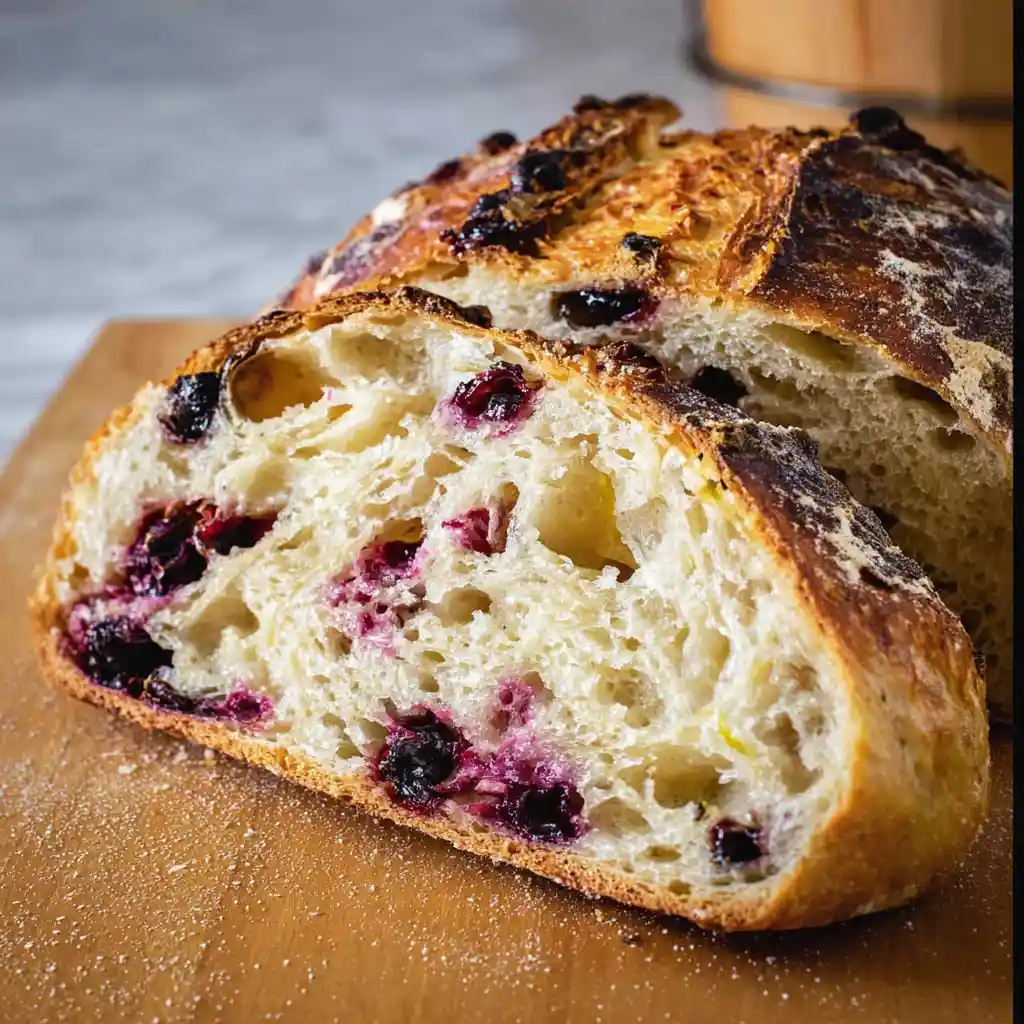

Blueberry Lemon Sourdough Bread
Ingredients
Equipment
Method
- Mix. Combine the bread flour, water, sugar, and bubbly sourdough starter in a large bowl. Stir the mixture until a rough dough forms, using your hands to incorporate any dry bits of flour. The dough will be slightly sticky but should come together.
- Rest (autolyze). Cover with a clean, damp tea towel and let the dough rest at room temperature for 30 minutes.
- Add the salt and fruit. After the 30-minute rest, sprinkle the salt evenly over the dough. Then, gently fold in the blueberries and lemon zest, careful not to burst the blueberries.
- Knead. Knead for 1–2 minutes until the salt and fruit are evenly distributed. The dough will feel slightly sticky, but that’s normal—focus on gentle handling to prevent the blueberries from breaking.
- First rise + stretch and folds. Cover the dough with the damp towel again and let it rise in a warm place for about 3 hours. During this rise, reshape the dough into a ball once every hour using stretch and folds. Lift a side of the dough up to stretch it and then fold it back down over towards the center. This folding helps strengthen the dough and build a structure for the final loaf.
- Second rise (proofing). Generously dust a banneton or a bowl lined with a clean towel with rice flour to prevent sticking. After the 3-hour rise, shape the dough into a tight ball and place it seam-side up into the prepared banneton. Then, cover it with plastic wrap or a damp towel and let it proof overnight in the refrigerator for 8–12 hours. This slow, cold fermentation deepens the flavor of the bread.
- Prep for baking. Preheat your oven to 450°F (232°C) the next morning with the Dutch oven placed inside to heat up. Then, remove the dough from the fridge and carefully turn it onto a piece of parchment paper, aiming for it to land in the center. If needed, gently reshape it into a round loaf. Using a sharp knife or bread lame, score the top of the dough with a few deep slashes to allow for expansion during baking.
- Bake. Once the oven is preheated, carefully remove the hot Dutch oven and transfer the parchment paper with the dough into it. Cover with the lid and bake for 25 minutes. Then, remove the lid and continue baking uncovered for another 25 minutes.
- Finish and cool. For an extra crispy crust, remove the loaf from the Dutch oven and bake it directly on the oven rack for an additional 5 minutes. The bread is done when it reaches an internal temperature of 200°F–210°F (93°C–99°C) and the crust is a deep golden brown. Then, carefully remove the bread from the oven and allow it to cool on a wire rack for at least 3–4 hours before slicing. This cooling time helps set the crumb structure inside the loaf.
Notes
Calories: 148kcal | Carbohydrates: 31g | Protein: 4g | Fat: 1g | Saturated Fat: 0.1g | Polyunsaturated Fat: 0.3g | Monounsaturated Fat: 0.1g | Sodium: 196mg | Potassium: 44mg | Fiber: 1g | Sugar: 5g | Vitamin A: 9IU | Vitamin C: 2mg | Calcium: 7mg | Iron: 0.3mg
The Magic Behind Blueberry Lemon Sourdough Bread
What makes sourdough different (and better)
Sourdough is more than just a trendy way to bake bread. It’s a living process that uses wild yeast and beneficial bacteria to ferment dough naturally. This slow fermentation gives sourdough its signature flavor and deep character, and it also makes the bread easier to digest. That tang you taste? It’s lactic acid produced by the starter, and it gives the loaf complexity that commercial yeast just can’t touch.
In this blueberry lemon sourdough bread, the fermentation process is essential. It creates a sturdy structure that can hold juicy fruit without turning soggy. The crumb ends up soft and chewy, while the crust develops a rich, golden color in the oven. The result is a loaf that’s rustic and nourishing, but still feels like a treat.
What’s especially satisfying about this recipe is how the sugar, starter, and fruit work together. The sugar gives the wild yeast a little extra food, boosting the rise. The blueberries introduce moisture without weighing the dough down. And the starter’s flavor grows stronger during the long, cold proofing phase, adding dimension to the final bake.
Why lemon and blueberry make a balanced loaf
Lemon zest and blueberries weren’t always part of sourdough tradition. But when you add them to a naturally fermented dough, something special happens. The lemon brightens the natural acidity of the starter instead of clashing with it. The zest spreads evenly through the dough, giving each slice a hint of citrus without overpowering it.
Blueberries are tender and sweet, but they can be tricky in baking. If you stir too hard, they burst and make streaks in the dough. That’s why this recipe folds them in gently after the autolyze stage, just before the kneading begins. Their juice stays mostly inside the skins, turning soft and jammy in the oven.
Combined, the lemon and blueberries create a flavor that’s both refreshing and comforting. You get sweetness, tartness, and that cozy sourdough depth—all in one slice.
Step-by-Step: How to Make Blueberry Lemon Sourdough Bread
Essential tools and prep tips for success
Baking sourdough isn’t about fancy gadgets, but having the right tools makes the process smoother. You’ll need a large mixing bowl to combine the ingredients and a clean tea towel or plastic wrap to cover the dough during resting stages. A banneton is ideal for shaping and holding the dough during its overnight rise, but a bowl lined with a well-floured towel works too.
For baking, a Dutch oven is your best friend. It traps steam and helps create that crisp, caramel-colored crust sourdough is known for. Parchment paper makes transferring the dough safe and simple. Use a bread lame or sharp knife to score the dough before baking. This helps control where the loaf expands in the oven. And when it’s done, a wire rack gives the bread the airflow it needs to cool properly without turning soggy on the bottom.
One key tip: handle the dough gently when folding in blueberries. Burst fruit can make the dough wet and streaky. Cold or frozen berries hold their shape better and are easier to work with, especially for beginners.
From mix to bake: the full process explained simply
Start by mixing the flour, lukewarm water, sugar, and your active sourdough starter in a large bowl. Stir it until you get a sticky, shaggy dough. Cover and let it rest for 30 minutes. This step is called autolyze, and it allows the flour to absorb water and start building structure.
Next, add the salt, lemon zest, and blueberries. Use your hands to fold everything in gently. Knead for about 1 to 2 minutes until evenly mixed. Then, let the dough rise for 3 hours. Every hour, stretch and fold the dough by pulling one side up and folding it back down. This strengthens the gluten.
After the first rise, shape the dough into a tight ball. Place it seam-side up into a floured banneton or prepared bowl. Cover and refrigerate overnight. This cold proofing gives the bread its deep flavor and better texture.
In the morning, preheat your oven to 450°F with the Dutch oven inside. Turn the dough onto parchment paper, score the top, and transfer it into the hot pot. Bake with the lid on for 25 minutes, then remove the lid and bake for another 25 minutes. For extra crust, bake uncovered directly on the rack for 5 more minutes.
Let the loaf cool on a wire rack for at least 3 hours before slicing. This helps set the crumb and gives the best texture.
Pro Tips, Storage, and Flavor Ideas
Keep it fresh and flavorful longer
One of the joys of sourdough is how well it keeps, and this blueberry lemon sourdough bread is no exception. Because the dough ferments slowly and naturally, it doesn’t dry out as quickly as store-bought bread. Still, a few simple habits will keep your loaf tasting great for days.
Once the bread is fully cooled, store it at room temperature in a paper bag or wrapped in a clean kitchen towel. Avoid airtight containers unless you’re freezing it, since trapped moisture can soften the crust. For best texture, slice only what you need, and leave the rest whole.
To freeze, wrap individual slices or the entire loaf tightly in plastic wrap, then place it in a freezer-safe bag. It will stay fresh for up to 3 months. To reheat, just pop a slice in the toaster or warm the loaf in a low oven until it’s soft inside with a crisp crust again.
If the bread begins to stale, don’t toss it. Day-old slices make excellent French toast, sourdough croutons, or bread pudding. The blueberry and lemon flavors add a subtle twist to these simple dishes.
Creative twists to try next time
Once you’ve made the classic version, there are lots of ways to make this recipe your own. Add a tablespoon of poppyseeds with the lemon zest for a bakery-style touch. Fold in a few chopped nuts, like walnuts or pecans, for extra crunch and depth.
For a floral note, try a pinch of dried culinary lavender, especially if you’re using frozen blueberries. A teaspoon of vanilla extract stirred in during mixing can also complement the sweetness of the fruit.
Need a dairy-free or vegan loaf? This recipe already fits the bill—just double-check your sugar and starter are vegan-friendly. If you want to go gluten-free, use a sourdough starter made with gluten-free flour and be sure to choose a strong blend that mimics bread flour’s structure.
There’s no need to limit this recipe to lemons either. Try orange zest for a softer citrus flavor, or mix in raspberries or blackberries instead of blueberries. The base dough is strong enough to support lots of variations, as long as you keep the water ratio steady and handle the fruit with care.

Frequently Asked Questions About Blueberry Lemon Sourdough Bread
Does lemon juice affect sourdough?
Lemon juice is acidic, and while it’s not used in this particular recipe, it can impact the balance of your sourdough. Too much acidity can slow down or weaken the activity of your wild yeast. That is why this recipe uses lemon zest instead, because it delivers bright citrus flavor without changing the dough’s fermentation or rise. Zest offers aroma and taste without interfering with the natural bacteria and yeast in your starter.
Can you add blueberries to sourdough bread?
Yes, absolutely. Blueberries are a great addition to sourdough when added the right way. The key is to gently fold them in after the autolyze stage, once the dough has rested and developed structure. This keeps the berries whole and helps avoid excess juice, which can make the dough sticky or streaked. Frozen blueberries are easier to work with because they hold their shape better and are less likely to burst during mixing.
What does lemon blueberry sourdough taste like?
This loaf strikes a balanced sweet and tangy flavor profile. The sourdough base gives it depth and a chewy texture, while the blueberries add pockets of soft sweetness throughout. Lemon zest brings in a fragrant brightness that lifts the whole flavor. It is not sugary like cake and not as tangy as plain sourdough, so it lands in the middle as something fresh, comforting, and slightly indulgent.
Why is sourdough bread not fattening?
Sourdough is often considered easier to digest and more supportive of stable blood sugar levels than many regular breads. The natural fermentation process breaks down some of the starches and gluten, which may help reduce sharp spikes in blood sugar. Sourdough also tends to feel more filling, thanks to its moisture and fiber-rich structure, so smaller portions can feel satisfying. While no bread is calorie free, sourdough’s slow fermentation and simple, whole-food ingredients make it a smart choice as part of a balanced diet.
Conclusion: Celebrate Simplicity with a Slice of Blueberry Lemon Sourdough
Blueberry lemon sourdough bread is more than just a pretty loaf. It’s a flavor-packed, naturally leavened recipe that brings together sweet berries, bright citrus, and deep sourdough character in every slice. Whether you’re a longtime sourdough baker or just getting started, this loaf offers something special. It’s forgiving, flexible, and perfect for sharing—or keeping all to yourself.
The process might take time, but the steps are simple, and the results are always worth it. From mixing and folding to slicing through that golden crust, baking this bread is a quiet joy. And the best part? Each loaf is a little different. A little more color here. A little more tang there. It keeps things interesting, just like sourdough should.
So go ahead. Grab a lemon, wash those blueberries, and let your starter shine. This is comfort food with character—and your kitchen is going to smell amazing.