
Intro
There’s something about the combination of balsamic vinegar and salmon that just works. The tangy richness of the glaze pairs beautifully with the buttery texture of the fish, creating a dish that tastes restaurant-worthy but comes together easily at home. This balsamic glazed salmon recipe uses simple pantry staples to create a sweet, savory, and slightly spicy sauce that doubles as both a marinade and finishing drizzle. Whether you bake it straight or add a quick sear for crisp edges, this salmon delivers bold flavor in every bite. It’s fast, elegant, and packed with balanced taste that’s hard to resist.
A Weeknight Dinner That Feels Like a Treat
The first time balsamic glaze transformed my salmon
The first time I tried balsamic glaze on salmon, I wasn’t sure what to expect. I was used to lemon and dill or garlic and butter. Balsamic felt like a stretch. But I had a bottle of vinegar in the pantry and some brown sugar, so I gave it a try.
The sauce came together quickly. Balsamic vinegar, Dijon mustard, garlic, a dash of red pepper flakes, and Worcestershire for depth. I poured half over the fillet, let it marinate while I prepped the sides, and saved the rest for drizzling.
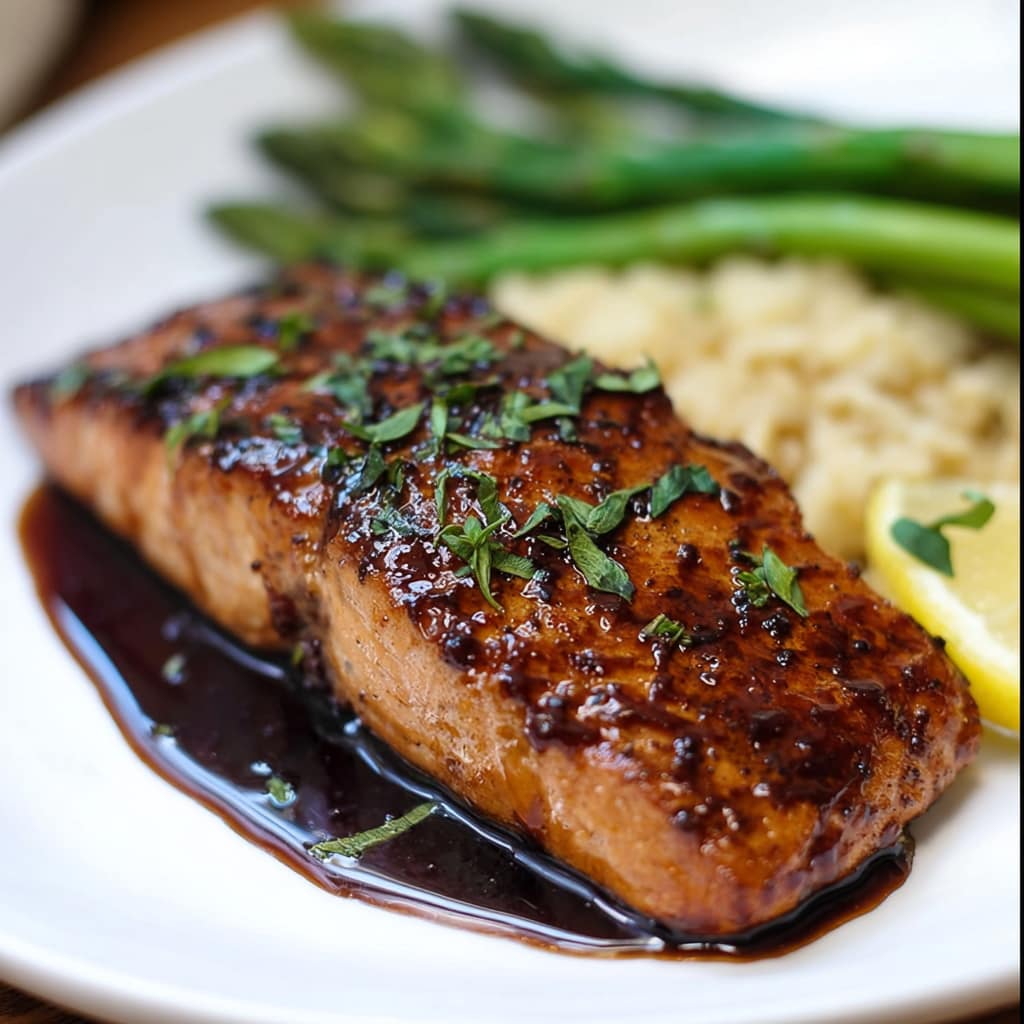
What came out of the oven was sticky, slightly charred around the edges, and full of flavor. The glaze had reduced into something glossy and bold. Sweet from the sugar, tangy from the vinegar, and balanced by the mustard and garlic. It instantly became one of my favorite ways to cook salmon.
Why balsamic glaze is so good on salmon
Salmon has a naturally rich and silky flavor that holds up well against strong sauces. Balsamic vinegar, with its deep, slightly sweet taste, cuts through the richness without overwhelming the fish. When paired with brown sugar, it turns into a glaze that caramelizes beautifully in the oven.
The Dijon mustard adds a little bite and helps the glaze cling to the fish. Garlic provides an aromatic base, while red pepper flakes offer a gentle heat. Worcestershire sauce brings in umami, making the glaze taste more complex than you’d expect from just a few ingredients.
This combination doesn’t just sit on the surface. It seeps into the salmon during marinating and then reduces in the oven into a thick, sticky finish. It’s a powerful yet balanced way to elevate a simple fillet into something crave-worthy.

Balsamic Glazed Salmon
Ingredients
Method
- Combine the sauce ingredients and stir to mix. Divide sauce into half.
- Marinate the salmon fillet with half the sauce in the fridge for 30 minutes.
- Arrange the salmon on a foil-lined baking sheet or casserole dish and bake at 350°F for 15-20 minutes depending on the thickness of the salmon. Baste the salmon with the leftover marinade halfway through.
- Dish and serve hot drizzled with the other half of the sauce.
- Enjoy!
Notes
- For crispy salmon, sear the salmon with some oil in a skillet over medium-high heat for 1-2 minutes before baking, or broil for 2-3 minutes in the oven before serving.
- For a thicker drizzling sauce, bring the other half of the sauce to a simmer in a saucepan and reduce until thickened.
Simple Steps for Perfect Balsamic Glazed Salmon
How to cook salmon that’s tender with a glossy glaze
This recipe follows an easy two-step approach: marinate and bake. Start by mixing the sauce ingredients—balsamic vinegar, brown sugar, Dijon mustard, minced garlic, red pepper flakes, Worcestershire sauce, and a pinch of salt and pepper. Divide the sauce in half. One part will marinate the salmon, the other will become the finishing glaze.
Let the salmon fillet sit in the marinade for about 30 minutes in the fridge. This helps the flavors soak into the fish while you prep your sides. When ready, transfer the salmon to a foil-lined baking sheet. Bake it in a preheated 350°F oven for 15 to 20 minutes. The exact time depends on the thickness of the fish. About halfway through, baste the salmon with some of the leftover marinade from the baking dish to build flavor and shine.
For an extra finish, you can broil the salmon for the final 2 to 3 minutes. This adds color and helps the glaze caramelize slightly. Another option is to quickly sear the salmon in a skillet before baking, giving the outside a crisp texture. Either method works depending on the result you’re going for.
While the salmon bakes, simmer the reserved half of the glaze in a small saucepan. This thickens it into a syrupy drizzle that adds the final touch of flavor right before serving.
Ingredient notes that make a difference
Brown sugar is key to balancing the acidity of the balsamic vinegar. It melts into the glaze, helping it caramelize without burning. You can use light or dark brown sugar. Dark gives a deeper molasses flavor, while light is more neutral.
Use a good-quality balsamic vinegar, not balsamic dressing. You want it to be sharp but not overly acidic. If your vinegar is especially strong, you can reduce the amount slightly or simmer it with a bit more sugar to mellow it.
Fresh garlic adds punch, but if you’re in a pinch, garlic powder can substitute. Just use a light hand, as it’s more concentrated. The Dijon mustard binds the sauce and adds subtle heat without making the glaze spicy. Red pepper flakes bring warmth but can be adjusted to taste or left out entirely for a milder version.
Worcestershire sauce deepens the flavor with a touch of umami and saltiness. Together, these ingredients create a glaze that’s bold, sticky, and perfectly suited to the richness of salmon.
Easy Variations and How to Serve Balsamic Glazed Salmon
Simple ways to change the flavor or fit your diet
One of the best things about this balsamic glazed salmon recipe is how adaptable it is. You can swap a few ingredients and still keep the dish flavorful and balanced. For a sweeter glaze, add a tablespoon of maple syrup or honey to the sauce. If you like it tangier, increase the vinegar slightly and reduce the sugar. Want more spice? Toss in a dash of cayenne pepper or double the red pepper flakes.
If you’re avoiding added sugar, you can try a natural sweetener like coconut sugar or even a low-carb substitute like monk fruit. Just keep in mind that different sweeteners may affect how well the glaze caramelizes.
To make it gluten-free, ensure your Worcestershire sauce is labeled gluten-free. Most vinegars are naturally gluten-free, but it never hurts to check the label.
For a stronger garlic flavor, increase the amount of minced garlic or mix in a pinch of garlic paste for a more concentrated effect. You can also add a few sprigs of fresh thyme or rosemary to the glaze while it simmers for a more herb-forward variation.
This recipe also works with salmon portions or a full side of salmon. Just adjust the cooking time accordingly. Thinner fillets may cook faster, while thick-cut pieces might need a few more minutes in the oven.
Serving ideas to complete the meal
Balsamic glazed salmon pairs beautifully with a wide range of sides. For something light, try it with roasted asparagus, green beans, or a simple arugula salad with shaved parmesan and lemon vinaigrette. The sweetness of the glaze contrasts nicely with bitter greens and tangy dressings.
If you’re craving something more filling, serve the salmon with garlic mashed potatoes, herbed rice, or a wild rice blend. You can also spoon the extra glaze over quinoa or couscous to tie everything together.
For a Mediterranean twist, pair it with grilled vegetables and warm crusty bread to mop up the sauce. Or go casual and serve the glazed salmon in grain bowls with roasted sweet potatoes, avocado, and fresh greens. It’s equally great for a cozy dinner or a low-fuss dinner party centerpiece.
Plating and FAQs About Balsamic Glazed Salmon
How to serve it like a pro, even on a weeknight
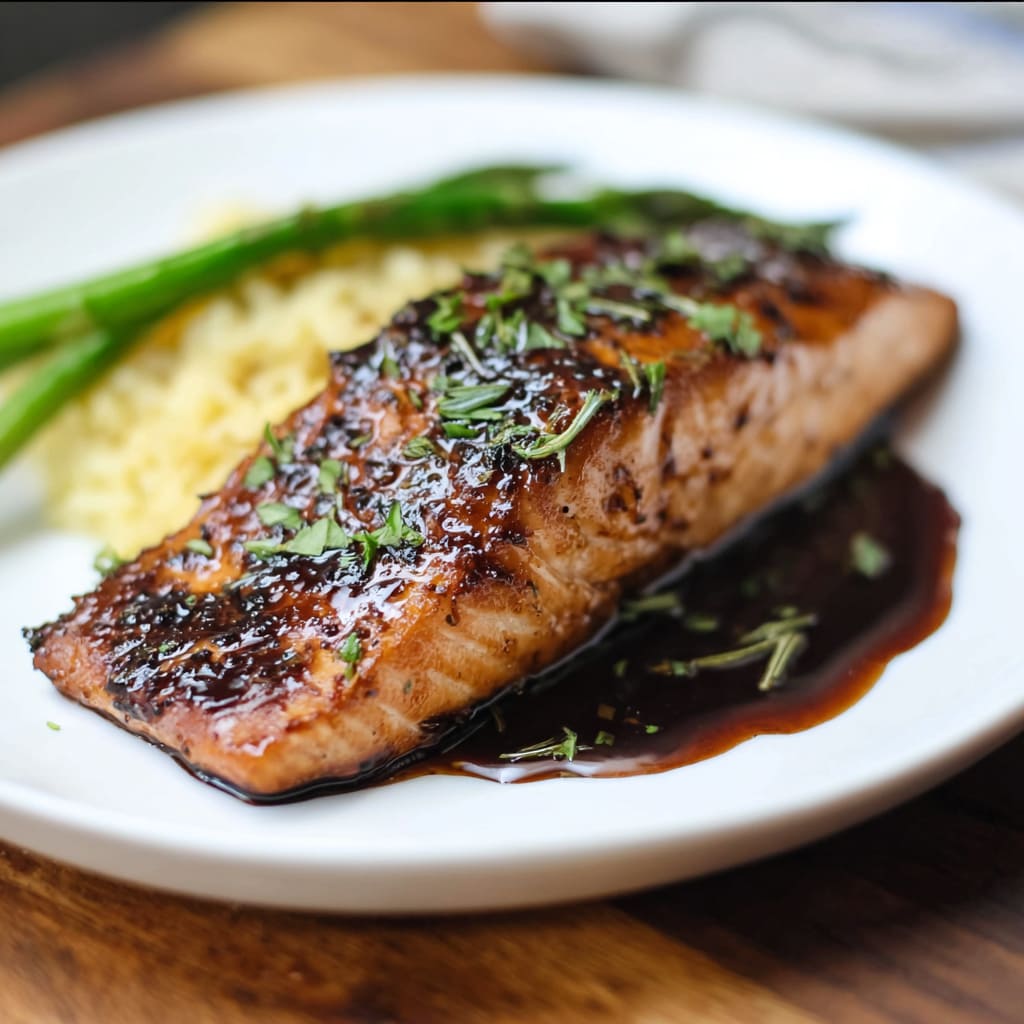
A beautifully glazed salmon fillet doesn’t need much to impress. Once the salmon is out of the oven and the glaze is reduced to a syrupy consistency, drizzle it generously over the fillet just before serving. The dark, glossy sauce creates an eye-catching finish, especially when paired with light-colored sides like mashed potatoes or steamed vegetables.
To elevate the presentation, place the salmon on a warm plate with a base of grains or greens. Spoon the glaze around the fish and top with a few fresh herbs like parsley or thyme. A wedge of lemon adds brightness and a touch of color. For a more rustic look, serve the salmon directly on a parchment-lined sheet pan with charred vegetables and a bowl of extra glaze on the side.
Whether you’re serving one fillet or an entire side of salmon, a little care in presentation goes a long way. It’s the kind of dish that feels elevated but still cozy enough for everyday meals.
Frequently Asked Questions
Would balsamic glaze be good on salmon?
Yes, balsamic glaze complements salmon exceptionally well. The sweet-tart profile balances the fish’s richness, while added ingredients like mustard and garlic deepen the overall flavor. It’s an easy way to elevate salmon with minimal effort.
What is balsamic glaze?
Balsamic glaze is a reduction made by simmering balsamic vinegar—often with sugar or another sweetener—until it thickens into a syrup-like consistency. In this recipe, the glaze includes brown sugar, Dijon mustard, garlic, and seasonings to give it a savory-sweet depth that pairs well with salmon.
What is a good glaze to put on salmon?
A good glaze enhances salmon without overpowering it. Balsamic glaze is ideal because it’s tangy, slightly sweet, and rich. Other great options include honey mustard, teriyaki, maple-soy, or garlic butter glazes. The key is balance, allowing the salmon’s natural flavor to shine.
Is balsamic vinegar good on fish?
Balsamic vinegar is excellent on fish, especially when reduced to a glaze. Its acidity cuts through fatty fish like salmon, creating a contrast that brings out the flavor of both the fish and the sauce. Just a little goes a long way.
Conclusion
Balsamic glazed salmon is a perfect blend of simplicity and bold flavor. The sweet tang of balsamic vinegar combined with garlic, mustard, and a touch of heat creates a glaze that elevates salmon into something truly special. Whether baked, seared, or broiled, this recipe delivers consistent results with minimal ingredients and effort. It’s the kind of dish you can serve on a busy weeknight or at a dinner party and feel proud either way. Once you try it, the balance of sticky, savory, and slightly sweet flavors will likely make it a staple in your kitchen.